


THROUGH A GLASS DARKLY
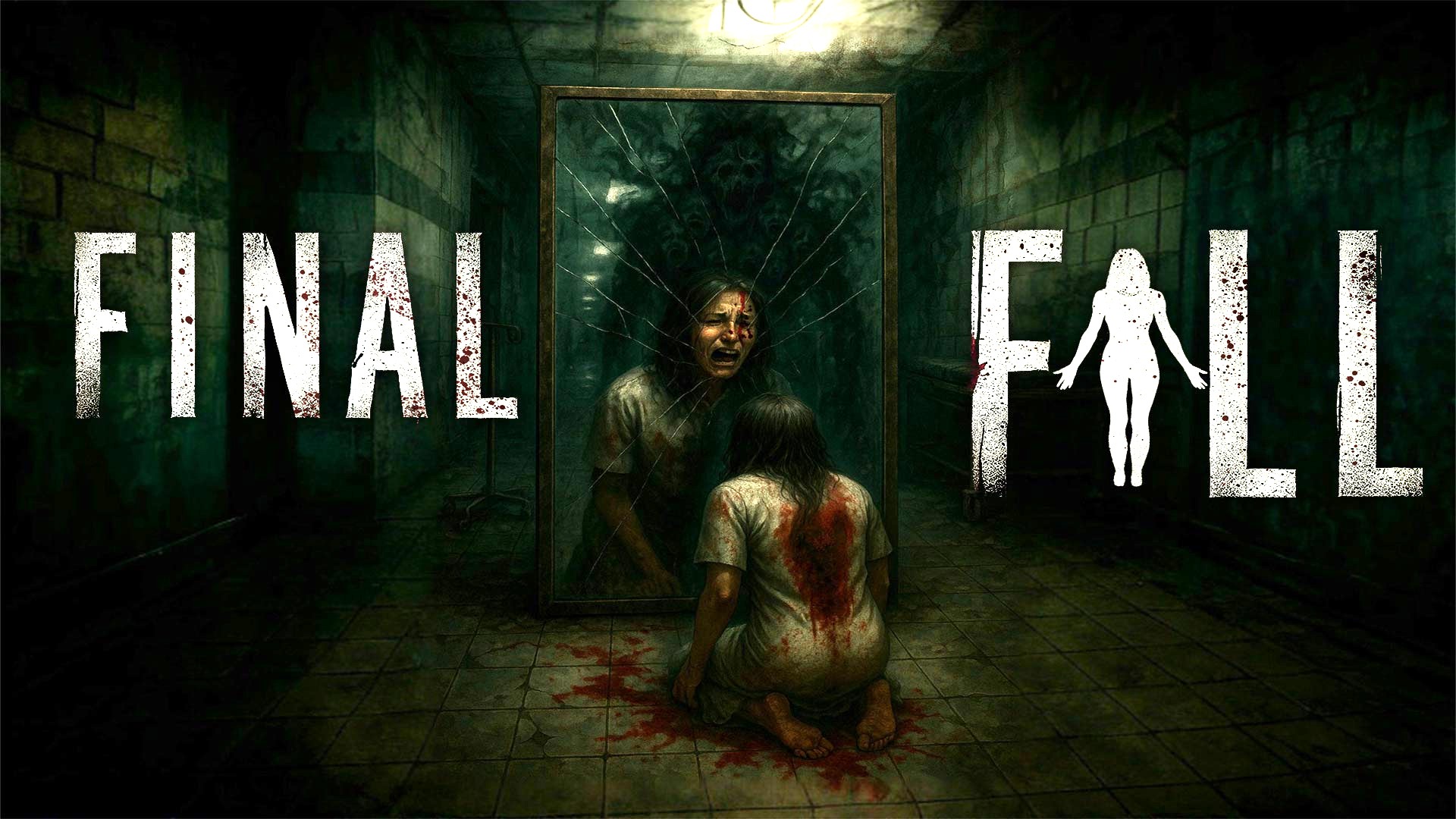
Final Fall is a third person, psychological horror, survival game built in Unreal Engine 5 by solo developer Emmanouil Kaparos Kaparakis. Available on PC now with a planned release for PS5 and Xbox, it’s a stripped down look at mental illness and self harm, often depicted with very graphic visuals. Throw in murder, dismemberment, and a sprinkle of nudity, and you’ve got a dark and intense game that covers its topics unapologetically.
You play the role of Ophelia, a patient at a mental health asylum. After watching an opening cinematic of what appears to be your failed suicide attempt, you wake up in a bedroom, naked and bloodied. As the room begins to fill with glowing words and incoherent whispers, the only thing that’s clear is you suffer from hallucinations. You have no other information and no memories, including the events that got you to this point. Your objective is to explore the asylum and uncover the truth of your past.
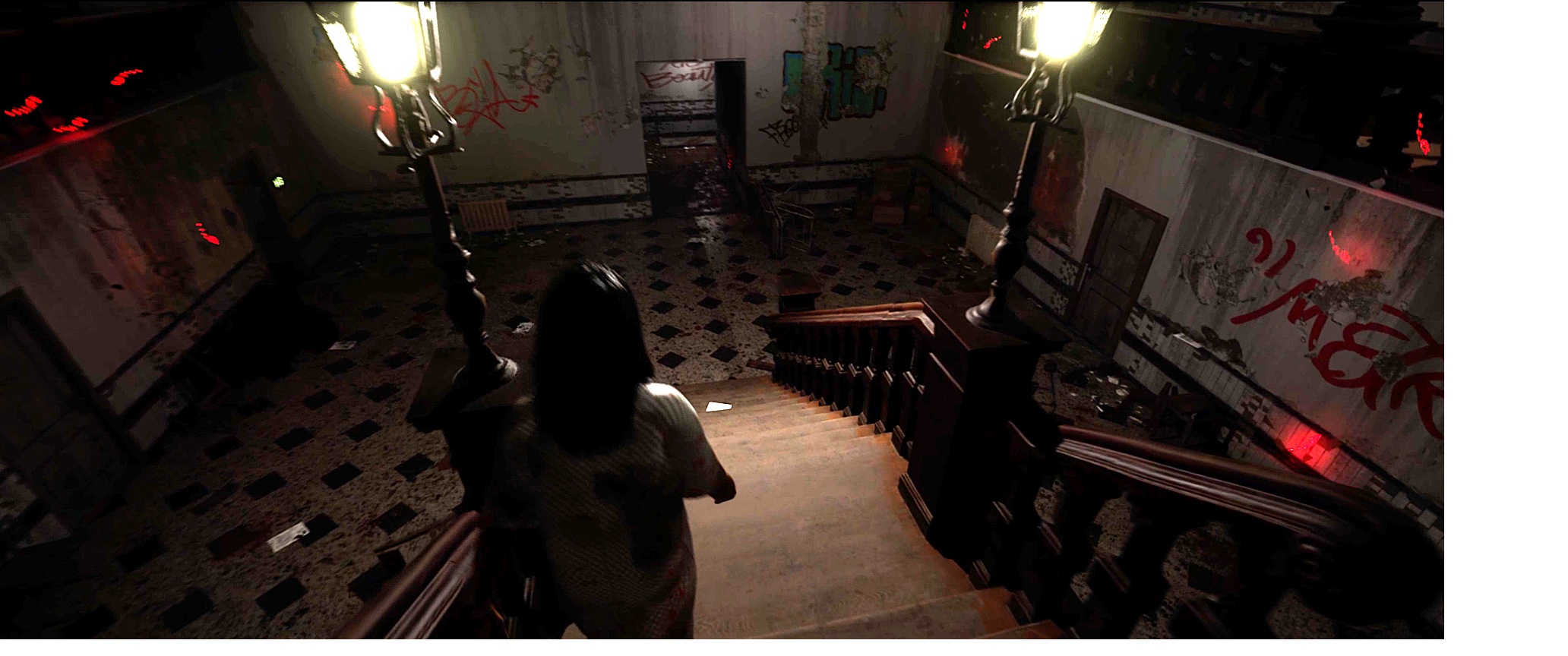
Outside the bedroom is a multi-floored, convoluted, and seemingly abandoned building. The entire place looks like it was last occupied by a gang of murderous squatters who left behind destruction, graffiti, a few bodies, and a lot of blood. You have access to several rooms and hallways to begin with, but most of the facility extends behind locked doors. Exploration will get you keys to some of these. To open the rest, you’ll spend a large chunk of time solving puzzles which reward you with open doors, clues to keypad codes, or items needed to solve other puzzles.
As you gain access to new areas, you’ll find many objects, each having a specific purpose. There are weapons, meds to help control hallucinations, and items required to enter rooms, solve puzzles, or operate machines. A device you’ll discover early on allows you to view recordings of your therapy sessions via discs scattered around the building. One of these reveals your diagnosis of schizophrenia. Others provide clues and information to help you figure out what to do next. Taken as a group, they seem to show Ophelia going through the stages of grief. What she’s grieving, however, is something you’ll need to uncover yourself.
WHAT DOESN’T KILL YOU MAKES YOU STRONGER
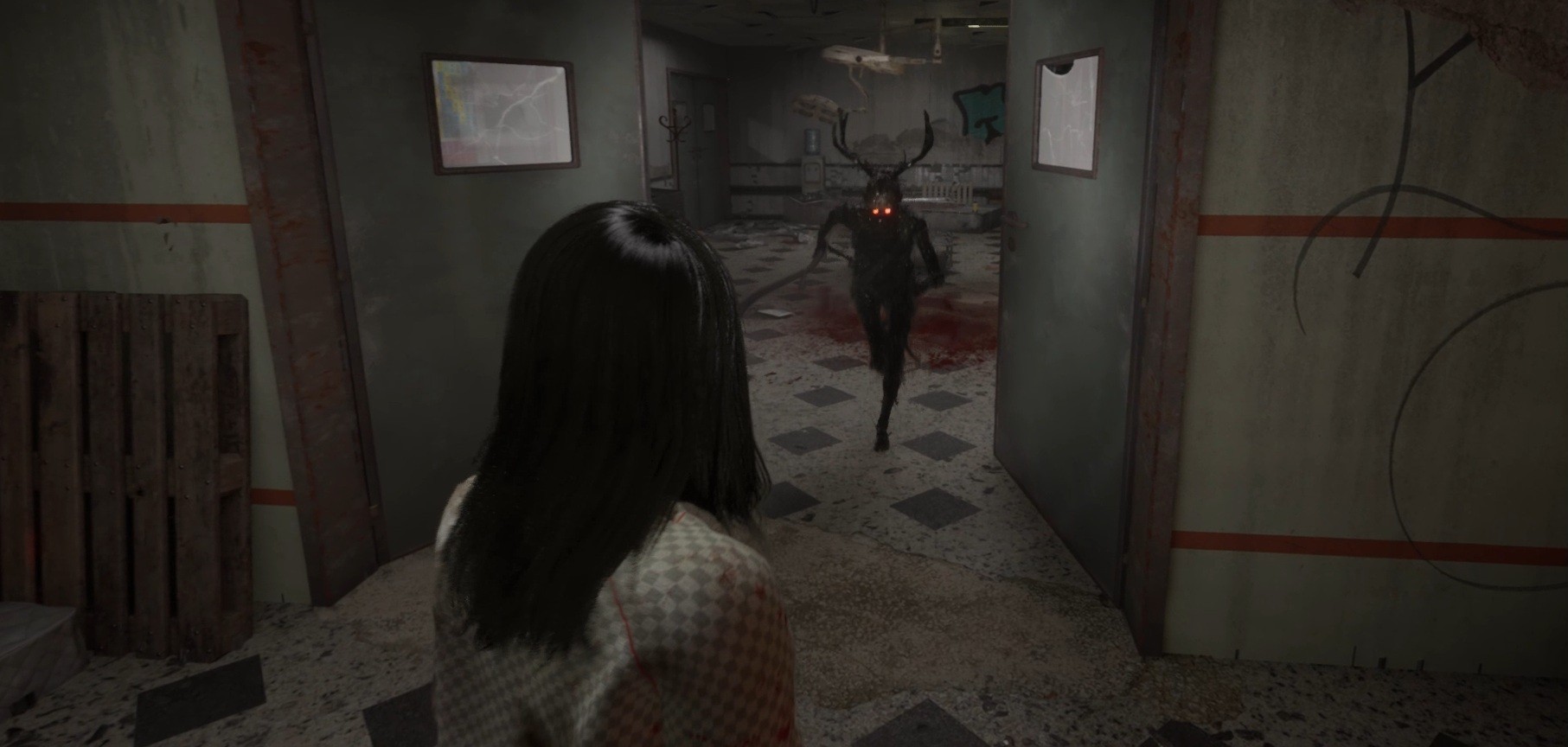
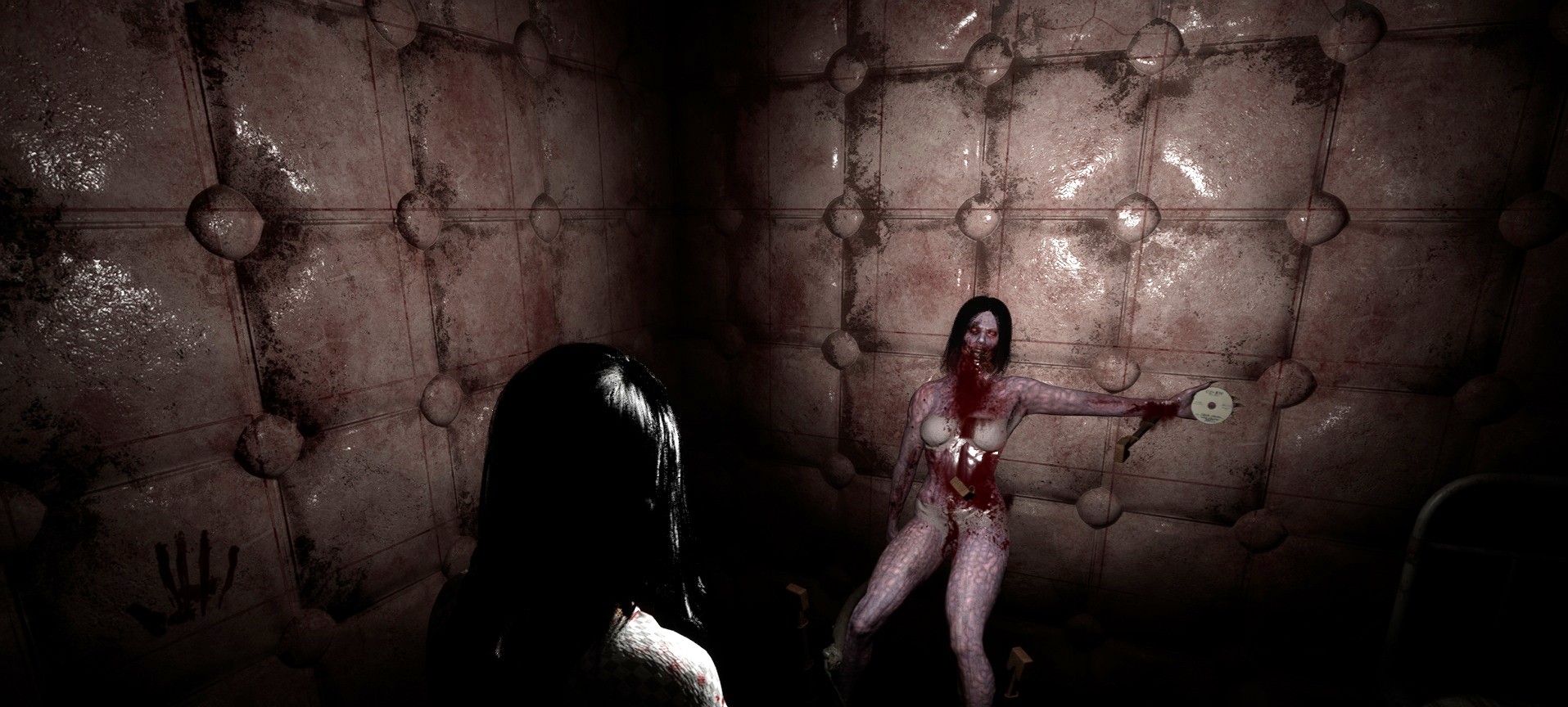
All the exploration doesn’t come without risk. What seem to be physical manifestations of your hallucinations are roaming the building. One is a shiny humanoid robot who encourages you to slit your throat or shoot yourself in the temple. Another, looking like a horned black devil, wields a blade capable of slicing off your head in a few strokes. To escape the robot you need to deal with a Quick Time Event. Another is triggered when the devil gets too close to you, but you can avoid it by killing him from a distance once you get a gun. If you do die, all is not lost. There are several save points in the building where you’ll respawn, losing just your interim progress.
There is a third enemy in the game I should mention - yourself. There are chairs and ledges throughout the building where you can hang yourself or jump to your death. I’m not sure why you’d choose to do this other than out of curiosity, or if you’re running low on resources like medications or bullets.
THE GOOD
The sound design is outstanding. Ambient noises are creepy, and the eternally dark and stormy night outside comes with nice weather effects. The voice actors do a great job and are all real humans which I appreciate. The monsters sound terrifying, and suspiciously like your therapist. Or how I imagine he would sound if possessed. Auditory hallucinations start out as a few incoherent whispers then gradually increase, becoming louder and more insistent. I was glad for the medications to control them as well as a setting to turn them down if they became too much.
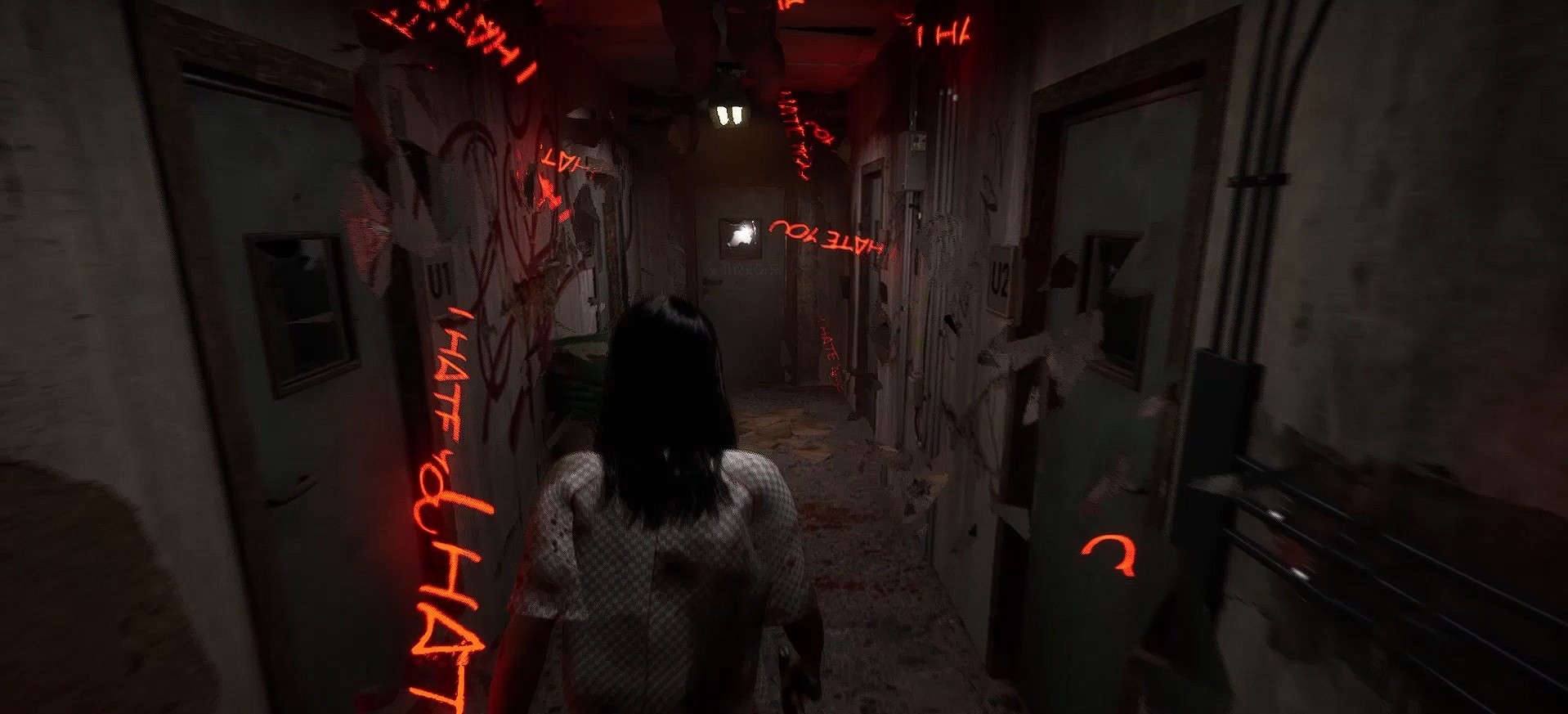
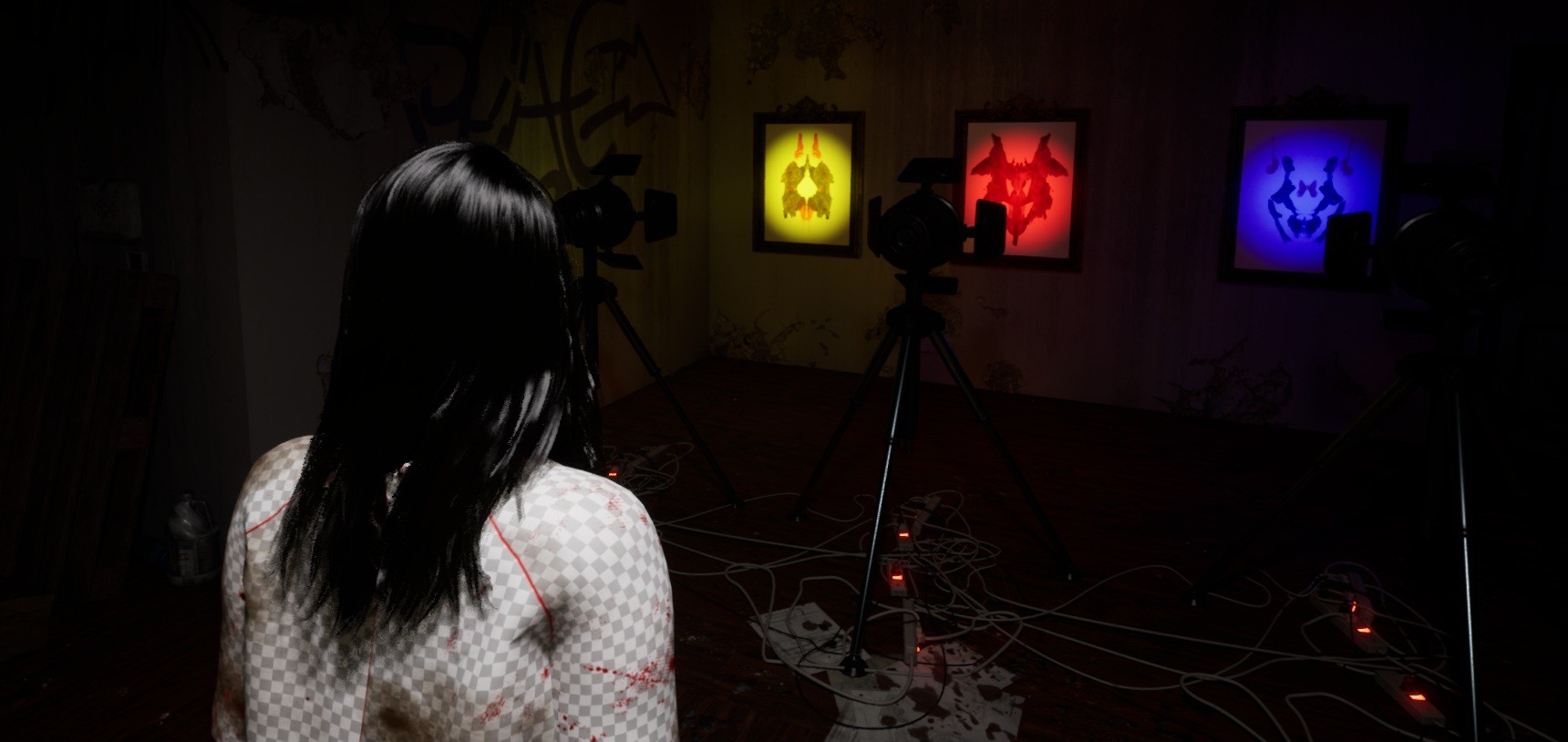
Undeniably disturbing, the visuals also stand out. The detailed asylum, character design, hallucinations, and distorted memories create an unsettling atmosphere. When combined with the audio, I felt like I had some sense of what it would be like to live with Ophelia’s diagnosis.
THERE’S NO POINT IN BEING NUTS IF YOU CAN’T HAVE A LITTLE FUN
I love puzzles as long as they’re varied, fun, and challenging but solvable. For the most part, the ones here fit the bill. There are documents and recordings to interpret, brainteasers to solve, codes to crack, and environmental puzzles to figure out. There’s even a piano to play and a musical chairs version of keep-your-eye-on-the-ball.
While not strictly a puzzle, I was frequently forced to work out next steps on my own - something I enjoyed. This is not a game that feeds instructions. Rather, it assumes you’re paying close enough attention to figure it out yourself. New information or items can often be connected back to something you’ve already learned, revealing your next move. The lack of any kind of map made this a bit more interesting, and I needed to sketch one out showing where halls and stairs led and what the many rooms contained.
THE BAD AND THE UGLY
I’m not the biggest fan of Quick Time Events. I can generally tolerate them, but two issues here irked me. First, the keys you need to use are awkward and there’s no way to rebind them. Second, it doesn’t take long before the monsters that trigger them start to show up so often they become a frequent interruption to the game flow as opposed to anything positive.
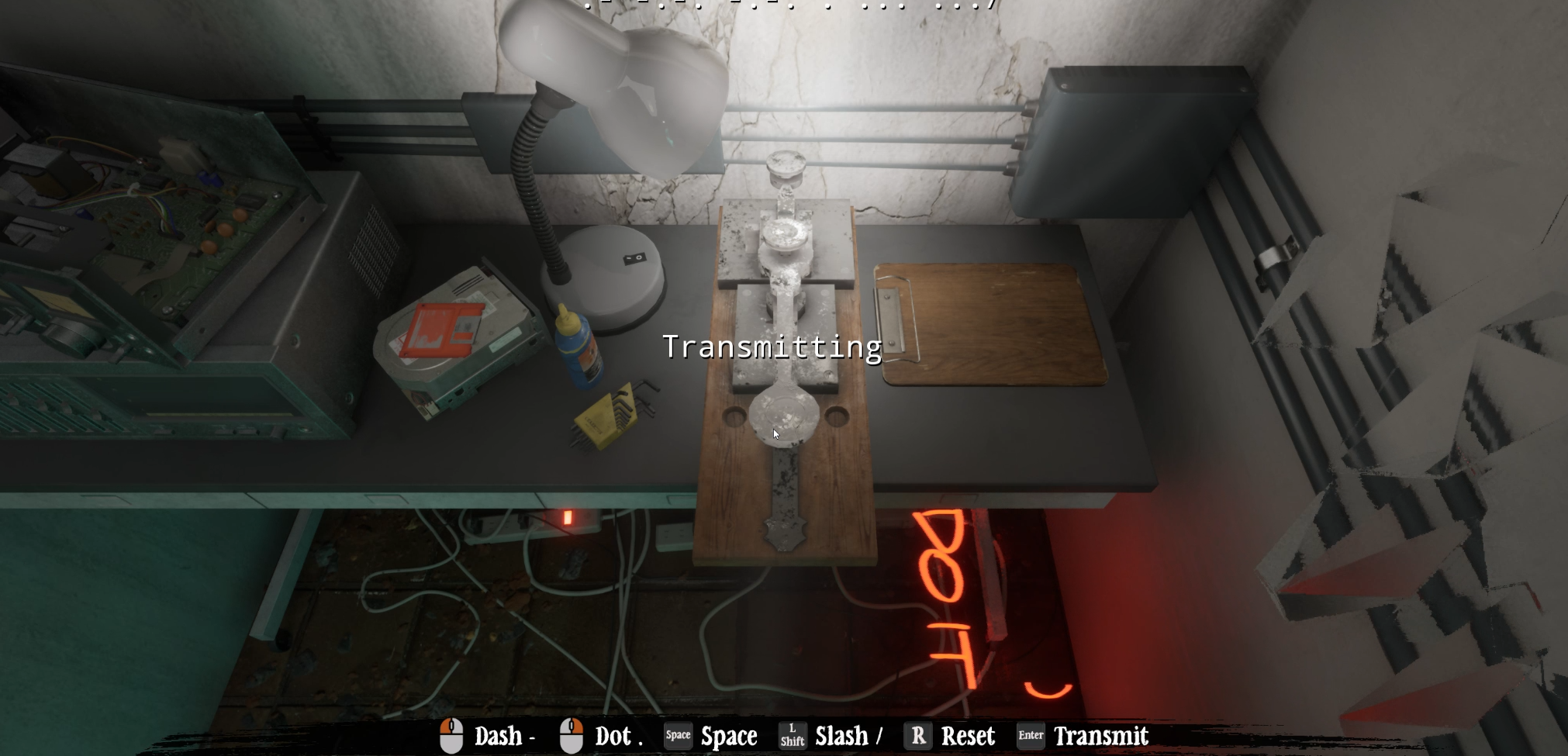
There are also several problematic puzzles. I came across one riddle I couldn’t solve for the life of me, leaving a room still locked when I finished the game. A couple of others are less puzzle, more straight up work. For example a telegraph machine forced me to translate way too many letters into morse code, click the corresponding keys, wait for a coded answer, then translate back. Making this worse was a tendency for the machine to not function. I’d enter what I was 100% sure was the correct code and get no reply. I’d need to exit the machine and try again, often a few times, to get it to respond appropriately.
This wasn’t the only buggy element. At one point, a clue suggested I interact with a wheelchair. I did, and the chair basically responded with I’m just a wheelchair, nothing to see here. I returned later to try again, and on the second attempt the chair suddenly decided it actually was something more, and triggered an event. It’s possible everything else works as intended, but an achievement I earned that implies there are multiple endings has me concerned. Nothing I came across seemed like a path choice, and I’m left wondering if there are other malfunctioning elements I missed that impacted outcomes.
CONCLUSION
Given how dark this game is, some might find the themes too disturbing. Others might find the lack of direction irritating. I know plenty of people who would get frustrated and give up when things didn’t work the way they’re supposed to. But what Final Fall does right is psychological horror. I’ve played many games with that tag, but rarely have I come across one that not only fully lives up to the description, it immerses you in it from start to finish. If this interests you, I’d say it’s worth the $9.99 price, although I’d suggest waiting for some of the bigger issues to get fixed.
 0
0 
