


Today marks the end of a game that never really got started.
Just over six months after its release, the plug is being pulled on King of Meat, the action-based online co-op dungeon crawler developed by Glowmade and published by Amazon Games. Set in a fantasy world of undead, monsters, and magic, King of Meat takes place on the set of its eponymous game show - a show in which one to four contenders undergo the challenge to conquer various dungeons full of combat, puzzles, and platforming.
The game was visually polished with excellent voice acting. Its writing had a satirical tone that commented on consumerism, marketing, and the pursuit of fame (which leaves a sad sense of irony seeing its own lack of success in those areas). The core gameplay loop was decently strong, with the main loop involving selecting a league to play in (basically, the difficulty level) and choosing between three randomly-selected dungeons available in that league (using a voting system when playing with multiple people).
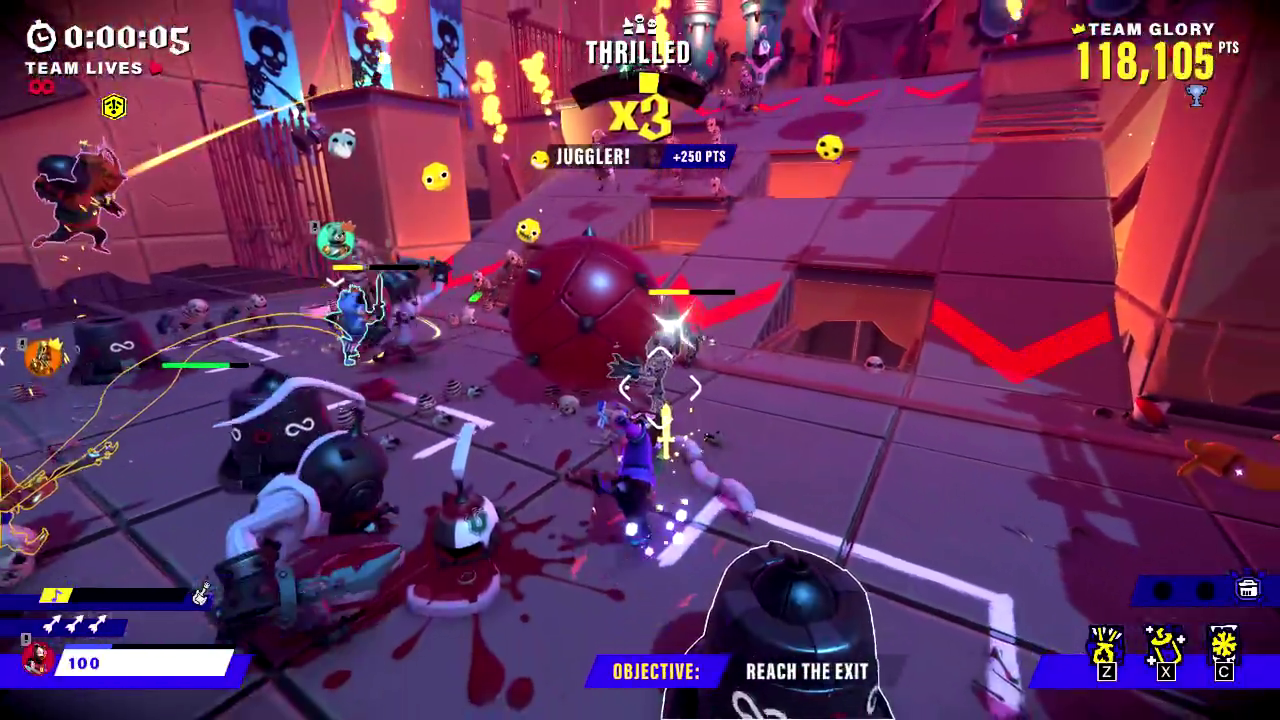
Although most dungeons had multiple aspects to them, the dungeons to choose from would be tagged Combat, Puzzle, or Platforming depending on what type of play that dungeon emphasized. The main goal would always be to get to the end of the dungeon without losing all of your lives first, but if you did die a couple times, it was all right - the Meat Phoenix would spit you out again in a new body like the congealed can of meat that you were.
The other important thing for the dungeon crawl would be not simply to get through the dungeon, but to look good doing it. Since the game was set on a reality TV show, players would also need to perform well, varying their actions to prevent the audience from getting bored. Each contestant would earn individual "Glory" that would contribute to that of the team as a whole, with higher amounts unlocking higher ranks of completion.
Encouraged Consumerism and Creative Dungeons
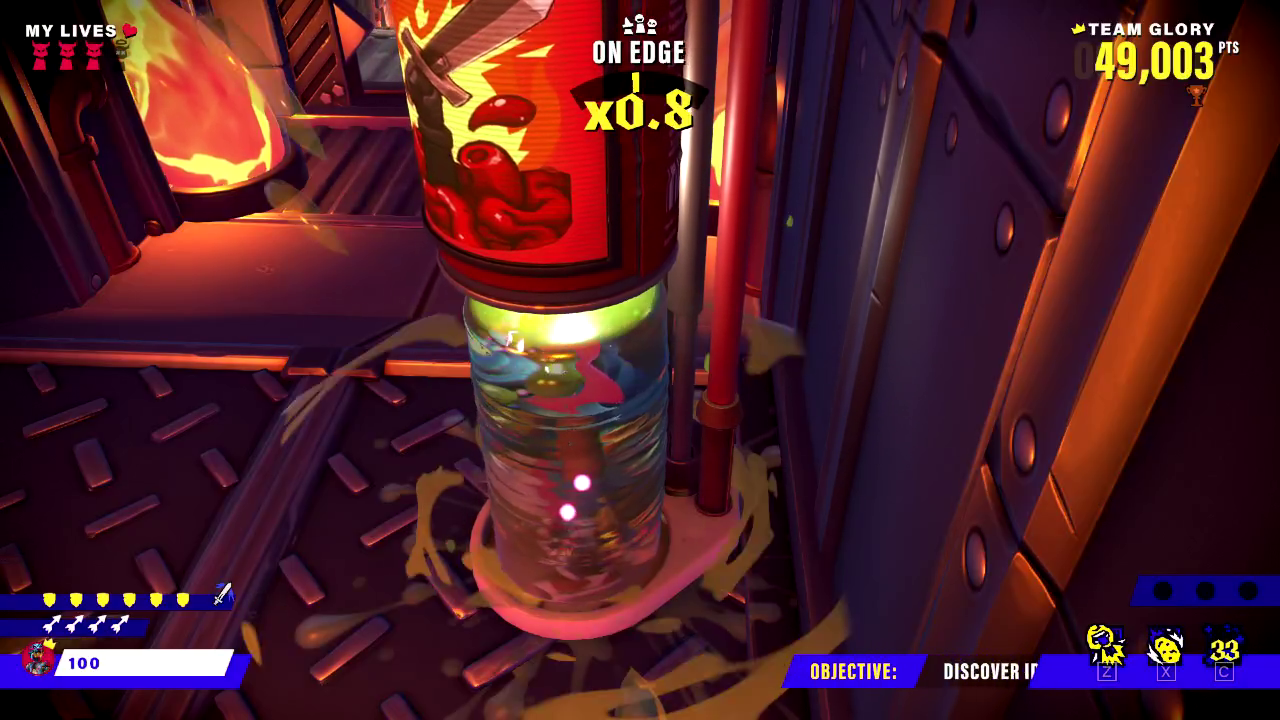
One of the mechanics that rather interested me was that the game was set up in such a way that a big part of progression (and essentially the only way to gain storyline progression) required players to spend currency earned in-game at the various shops in order to increase affinity with each of the NPCS running them. I personally tend to want to save my in-game money and only use it if it seems completely necessary, but this game had me wanting to earn more money so that I could spend it on items I didn't even want just to get a little bit more of each NPC's story. The world felt rich in lore and, though some NPCs were more interesting than others, I did find myself wanting to know more about all of them.
Shops not using currency would require a different form of progression - mainly repeating moves with weapons or performing specific actions that would increase the amount of Glory earned in each level. These challenges and triumphs weren't just there to provide arbitrary goals - they also served the purpose of highlighting different moves that could contribute to Glory scores, essentially teaching players how to improve at playing the game.
But King of Meat was not limited to just dungeon runs. It also contained the other half of the equation - dungeon creation. The game had a sophisticated dungeon editor that would allow you to place and connect pre-made rooms and edit their contents to create a complex dungeon focused on platforming, combat, puzzles, racing - whatever players wanted it to be. There were some excellent tutorials available in game to help players understand how things worked. Or they could just start creating their own dungeon and learn how it worked as they went.
Once a dungeon had been created, it would need to be verified by running through it once to ensure it was possible to complete before its creator could publish it for other players to try. It was still possible to make flawed dungeons since players could get stuck if they did things in a different order than the creator had and managed to lock themselves out of whatever was required for completion, but it was always certain that there was at least a way that it was possible to complete each dungeon.
I looked through several of the older dungeons in the last couple of weeks and, although I did have to sift through many of the same repeat quick dungeon people were creating near the end to farm some of the Discovery Dungeon related triumphs, I did also find some very elaborate and impressive dungeons that made for unique experiences different from any of the developer-made dungeons. It made me feel that the loss of this dungeon builder is one of the saddest parts of the shutdown. Hopefully, the creators were able to save footage of a play through of each of their creations before the end.
The Ways of Failure
The shutdown of the game didn't come as a great surprise. There were aspirations of over 100,000 concurrent players but, at its height, the game only ever had just over 300 concurrent players. The biggest reason the game never got the player base it aspired to was in the marketing. For a game that wanted so badly to gain a following of hundreds of thousands of players, it did a really poor job of letting the players who would be interested in it know about its existence.
After the shutdown of the game was announced, I told some gamer friends I might not see them too much for about a month because I'd be grinding out King of Meat achievements before the closure of the game.
"What the heck is King of Meat?" one asked.
Another commented that he'd seen its Gamescom ad and had thought it was a PvP fighting game.
I showed a third friend one of the in-game ads that are unlockable rewards for progression.
"This is hilarious!" he said. "If I'd seen this, I totally would have wanted to buy the game!"
He had seen some King of Meat ads on YouTube, but they were for the accompanying cartoon and he hadn't realized it was also a game.
If people who regularly follow gaming news never even heard about the game, how could it be expected to find an audience? Whoever was getting the ads, it doesn't seem like they were geared toward actual gamers.
Another huge reason why the game failed to get its player base was the price. As a well-acted game with quality graphics and gameplay, it would be well worth its release price of 30 USD (my copy was £23.95) if it had a strong solo campaign to play. Although there was some solo content, King of Meat's strength was in its co-op gameplay and dungeon building. The game was much more fun to play with a friend or three, and there isn't a huge incentive to create dungeons unless you have someone to share them with. Since the ability to progress triumphs in user-created dungeons was removed within the first month of its release (mainly to prevent quick farming of the grindier triumphs, I presume) there wasn't much incentive to play dungeons created by strangers either, as it would be at the cost of progression.
With the entire game online only with no local co-op option, its $30 price tag could quickly become a $120 price tag to get people together to play the game as it was meant to be played.
Saying Goodbye
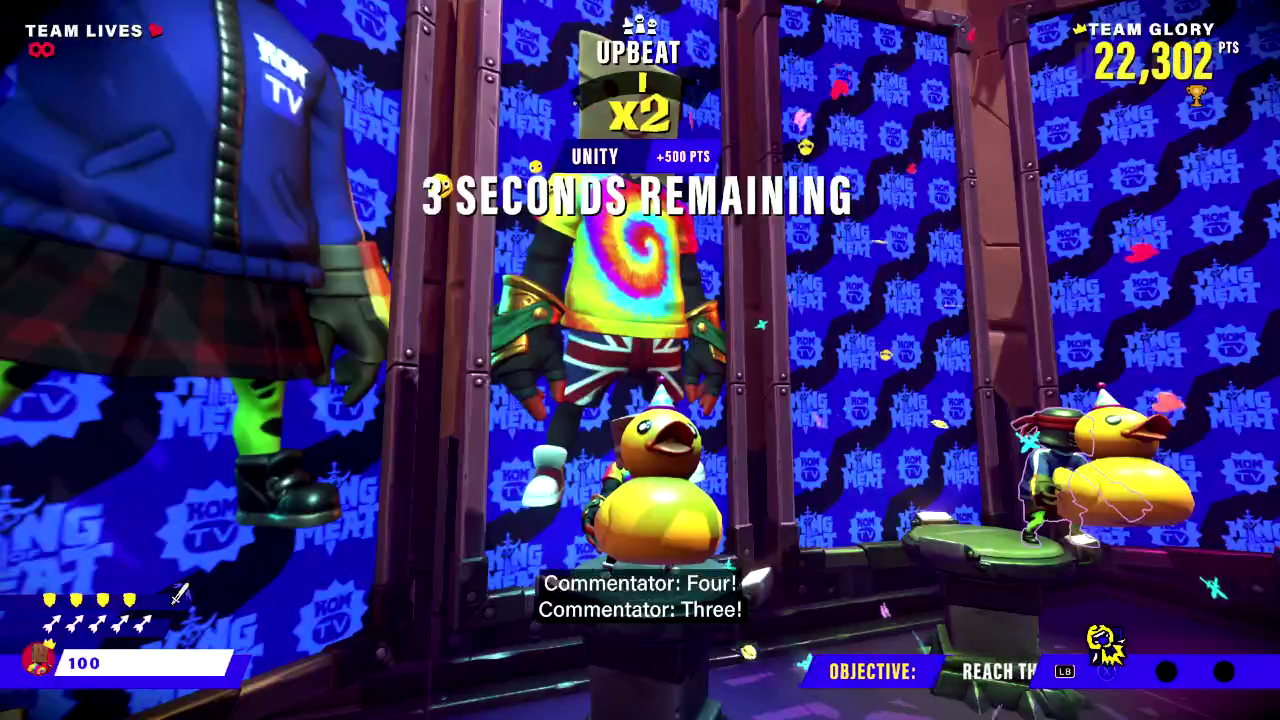
As far as shutdowns go, I feel this one was handled extremely well. Once it was clear that the game wasn't going to find the player base it needed to be maintained, its eventual shutdown was announced along with a statement that anyone who had purchased the game would be receiving a full refund. Refunds were issued and enough time was given between the announcement and shutdown that it was possible for a dedicated player who hadn't yet started the game to get in the 100-200 hours of play needed to get all achievements (assuming said player had an equally dedicated partner and two other people to join in for a session or two).
It wasn't a perfect game. There was a lot of grindiness to progression and repetition in the developer-made dungeons. Players would have to build their characters a bit before they could unlock new weapons and equipment that could add more variety to the game. Fans of achievements would find themselves frustrated by the difficulty involved in getting that one last level with their Bartender so they could unlock the final three achievements. But as someone lucky enough to get to play with a friend (and even very briefly with three) and explore some of the extreme creativity seen in some of the user-made dungeons, I can say that the game will not go unmissed.
 0
0 
