



A Note from the Author:
Once upon a time, (not all too long ago for some of us), there were stores lined with disc cases, cartridges and memory cards. These are now old relics of the past that, at one point in time, gave our own collections a sense of ownership- and alongside that: Permanence. However, as years have passed, much of what was has been replaced. Gone are the days of Funcoland (once a giant and pioneer for the used-game resale market), Game Crazy, and other second hand retailers, with the few remaining turning to Trading Card Games and kitsch merchandise to remain afloat.
With the loss of hard media, we have also lost that permanence. One day a game can exist, and the next its vanished into thin air- no fanfare, sometimes not even a digital storefront remaining. All that's left are the memories expected to be quietly swept under the carpet as though they never even existed.
Sometimes the cause can be something as simple as a license expiration. Other times corporate mergers, legal disputes, or a publisher simply deciding a title hasn't been "profitable enough" can be to blame. Sometimes, they may return; but for the titles that don't...? Well, they quickly become expensive, sometimes difficult to access, and often forgotten.
In Delisted, I'll be digging through some of the abandoned storefronts, lost licenses and digital graveyards to revisit games that have all but vanished from sale, see how they hold up, and if they are really worth tracking down.
That being said, welcome to Case File #001 of Delisted. There are few titles more suited to land as the first in the series, and this one just felt right. 
10 Years in the Making
With a complex history spanning about a decade, Prey has had multiple renditions under multiple hands. In 1995, it was initially seen as the first in a line of games planned to be running on an in-house engine that was cutting edge and would act much like Unreal Engine did for Epic Games. This engine was boasting the ability to effectively "rip holes" in time and space, and reshape the world in real time. The concept was outstanding, and it was well received in its demonstrations. However, over time issues began to pile up, and it was quickly realized that, in the words of head engineer William Scarbo "...in hindsight, portal tricks such as these should be used as tricks, not as an engine paradigm." The game wouldn't be cancelled, but it was placed on indefinite hold.
Finally, in 2001, 3D Realms began development of yet another version of Prey with a 30 person team. The technology they had initially sought had been made stable in other engines at this point, and eventually they would settle on iD Tech 4 as the game engine. Human Head Studios was then commissioned to develop the game, using previous designs as a springboard. Despite leaks of the title years in advance that were denied, finally in April of 2005, Prey was formally announced and released a little over a year later in 2006.
Shattered Hopes
In 2009, even after an announcement that Prey 2 was in development, rights to the franchise were acquired by none other than Bethesda Softworks, and iD Software parent company ZeniMax Media. Finally, in 2014, the vice-president of Bethesda Pete Hines gave the final word; Prey 2 was cancelled. He stated "it was a game we believed in, but we never felt that it got to where it needed to be – we never saw a path to success if we finished it. It wasn't up to our quality standard, and we decided to cancel it. It's no longer in development. That wasn't an easy decision, but it's one that won't surprise many folks given that we hadn't been talking about it. Human Head Studios is no longer working on it. It's a franchise we still believe we can do something with — we just need to see what that something is." And, unfortunately, he was very, very right- just not in a way anyone quite expected, or wanted.
Announced only a year prior to its release, Arkane Studios developed what most people now recognize as Prey in 2017.
While marked as a "loose reboot" or "re-imagining", many who had any knowledge of the original found it anything but. In reality, the two shared no plot connections sans the VERY vague similarity that in both titles you fight aliens. Unfortunately, this would be yet another "Oh, Bethesda!" moment for the ages, as it really seemed as though they ultimately thought it just "sounded cool" as a title, despite Arkane reportedly disliking the choice- feeling it was very unfair to fans of the original game.
Having played both, I feel the 2017 release would have done much better had it been under its own unique name. Each title is a completely different experience, and both are ENTIRELY worth the time to play though. This sentiment seems to be fairly universal. A full, comprehensive review of the 2017 Prey can be found HERE. Ultimately, it was a poor decision on Bethesdas part, and likely stunted what could have been a much more well received title.
So, all that being said, let's dive into the main attraction.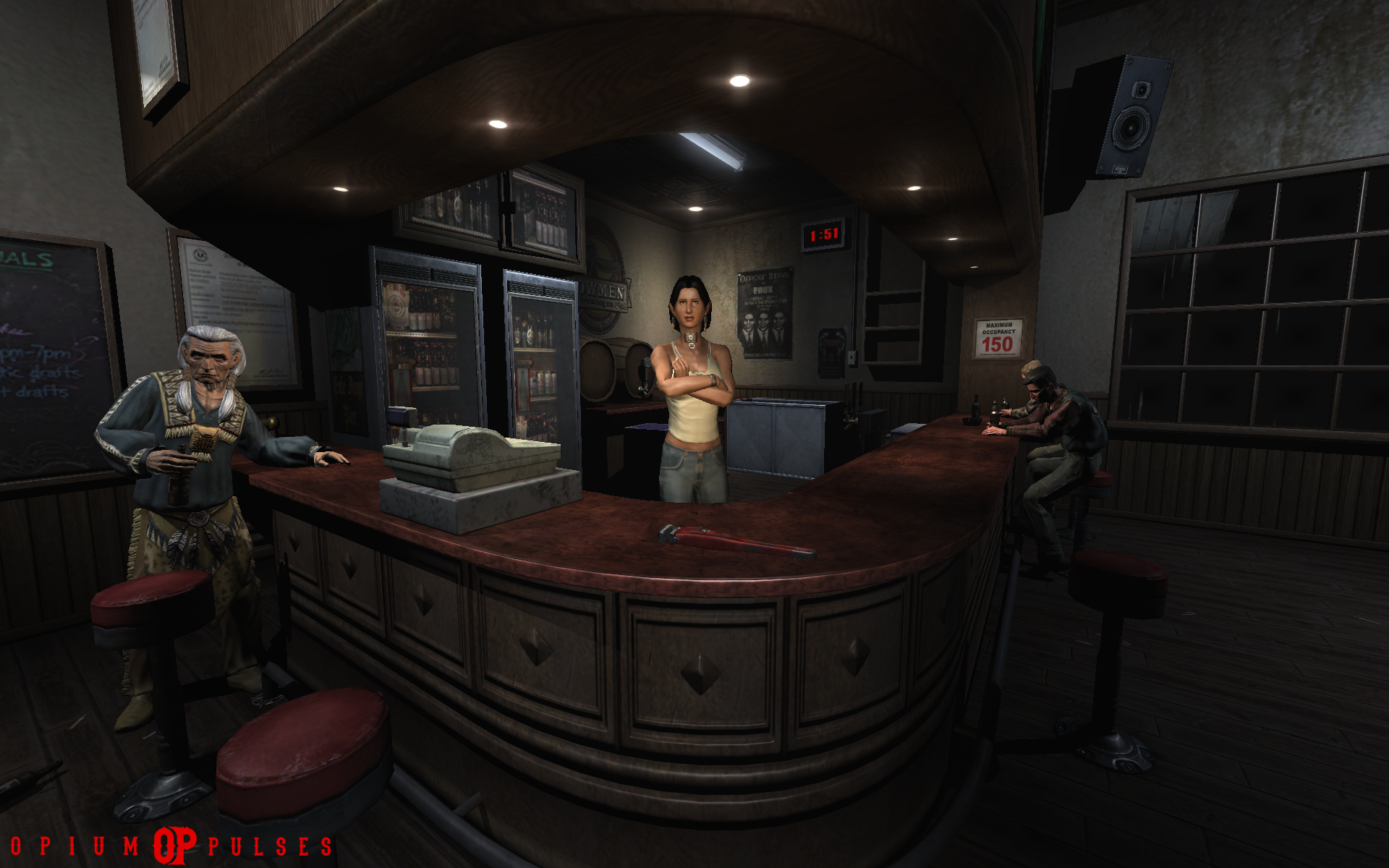 Don't be fooled: This is what some consider to be the home of one of the most iconic video game intros of all time. And for good reason.
Abductions and a Dive Bar
Prey starts out mundane enough. You play as Domasi "Tommy" Tawodi, a Cherokee veteran-turned-mechanic living on an Oklahoma Reservation. Clearly feeling trapped by his heritage and the expectations that seemed to come with it, much of the introduction to the main characters is Tommy dismissing his grandfather, Enisi, and trying to convince his girlfriend, Jen, to leave the reservation. It becomes clear very quickly that Jen and Enisi serve to foil Tommys cold rejection of his heritage. Despite his desire to go, Jen flat out refuses. She feels at home in the reservation, and in her bar, the Roadhouse. This dingy hole-in-the-wall serves as the backdrop for the game's iconic opening sequence, where an otherwise uneventful bar fight becomes the first domino to fall.
And when I say ICONIC.
Very few games have caught me off guard like Prey. A hole-in-the-wall dive bar suddenly disrupted - the lights flicker, the screen shakes, and a warning suddenly blares on the TV. Confusion has the player bouncing window to window, when suddenly, an eerie green beam of light engulfs a car parked outside, sending it skyward as its alarm blares. Jolting to life unexpectedly, the jukebox begins to play Blue Öyster Cult's "Don't Fear the Reaper" building in the background as you can do nothing but watch the horrific scene play out in front of you.
The building tremors, shakes, begins to crumble and collapse in areas as you struggle to understand what's really happening, as Jen frantically panics behind the counter. In comparison, while clearly frightened, your grandfather seems to have a peace beyond the situation. One after the next, the green beam pulls each of them. First Enisi, then Jen, and no matter how much you try and run away- you too will be helpless, abducted by the light.
Far From Home and All Alone
When you eventually come-to, you find out that this was no small-scale event. As you are unloaded onto some kind of automated conveyer via restraint system, it quickly becomes apparent this is a mass invasion of Earth. Hundreds of bodies, careening about via conveyer, being sorted, separated and sent to various parts of this enormous ship called The Sphere. Screams fill the air as you helplessly watch as you end up separated from both Jen and Enisi.
Unexpectedly, a mysterious man plants an explosive along the line, causing enough damage to the system to set you free. He vanishes just as quickly as he appeared, and you are left to fend for yourself. But before you manage to find your way out of this apparent processing area, you catch sight of Enisi who is now trapped in a barbaric looking device on a nearby wall. Before you can do anything to even try and free him, he is brutally impaled, effectively ripping away your strangely calm spiritual guide within seconds of your "freedom".
While your grandfathers passing is devastating, it seemingly only intensifies your drive to find Jen, nor is it the last time you'll see or hear from Enisi. During his desperate attempt to locate his girlfriend, Tommy takes a fall that nearly ends his life. However, instead of dying, he finds himself in The Land of the Ancients where you'll be reunited with your grandfather, at least temporarily. Your stay is brief, and you are bestowed a spiritual gift (as well as help from Talon, the spirit of his childhood pet hawk) that allows you to "Spirit Walk" and move through elemental hazards and forcefields that would otherwise hinder your physical form.
This is absolutely one of the most fun and unique tools in the game. While it is less relied upon early on, the later parts of the game require some interesting use of this mechanic, and you'll be finding yourself turning to it often enough. Ultimately, this really is the core foundation of the story. 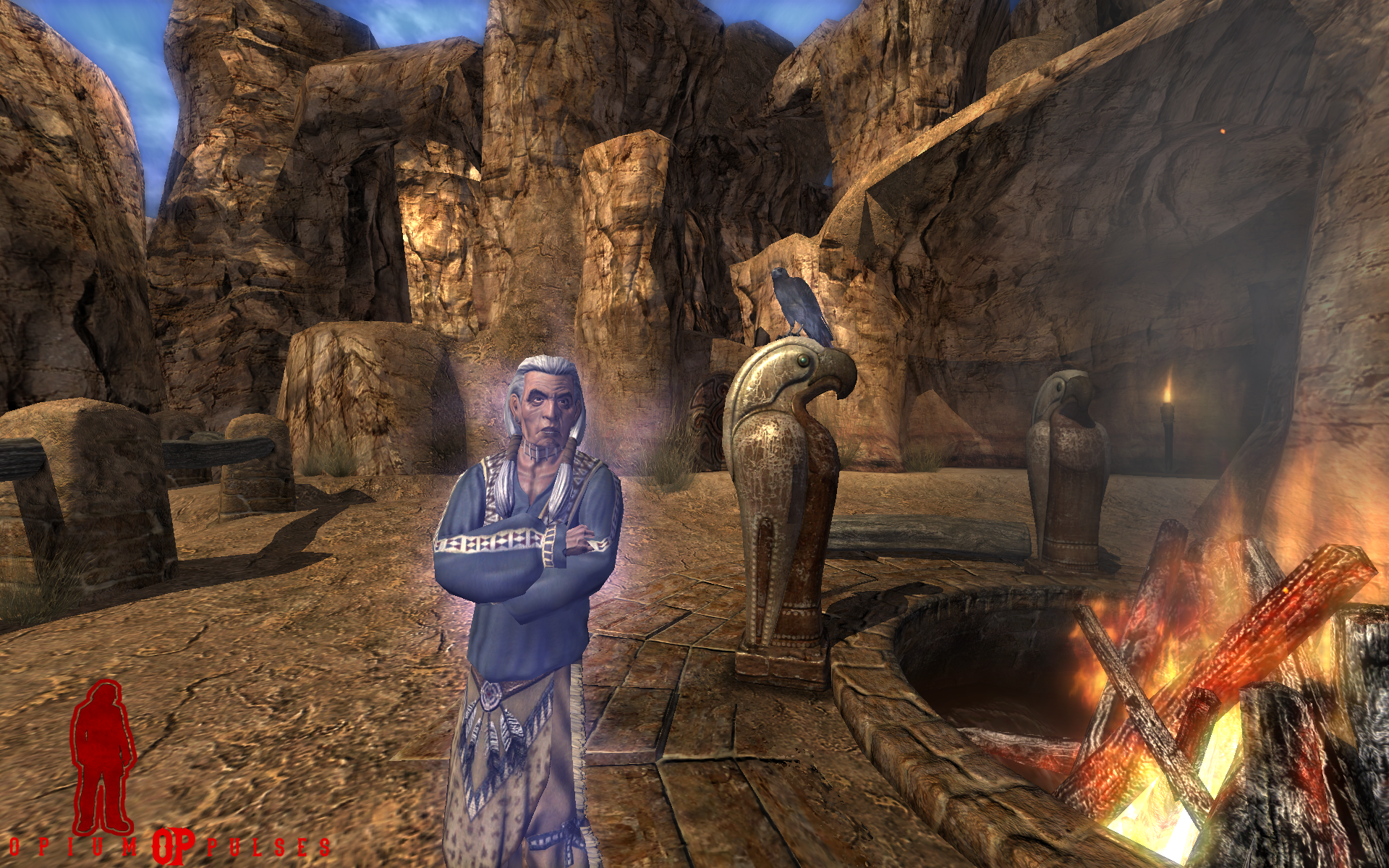 Enisi, and Talon. Mentor and Spirit Guide.
Upside-down, Inside Out
There are a few core mechanics and details that really made Prey stand out from other titles in its time. From conception, it was very obvious that developers had big plans for what they wanted to be possible in this game, and I think the execution lends to some of the most memorable gameplay in (somewhat) recent memory. Twenty years later, and I still found myself blown away.
Early on, you are introduced to glowing pathways that stretch up walls, ceilings, and some even curling out of sight. As long as the cat walk terminal is activated and the path is illuminated, you will find you can simply stroll right along the pathway, held in place by a gravitational field that the path generates. Some of your wall-walking adventures are brief, and others you need to traverse entire rooms.
That being said, a fair word of caution:
If you have motion sickness, this game may not be for you.
While I myself don't suffer from it personally, I still found the transitions to be disorienting. The camera rotates along with you, and you are usually STILL needing to keep an eye on oncoming enemies. You could be upside down, but they may be above you, below you, or to the side. Not only that, but they are smart enough to know when the console to the gravitational field is nearby and are more than happy to send you falling to an early grave- so you better think fast. One can only imagine that this could lend to the camera shifting suddenly (and at times, unexpectedly) - and you would be right.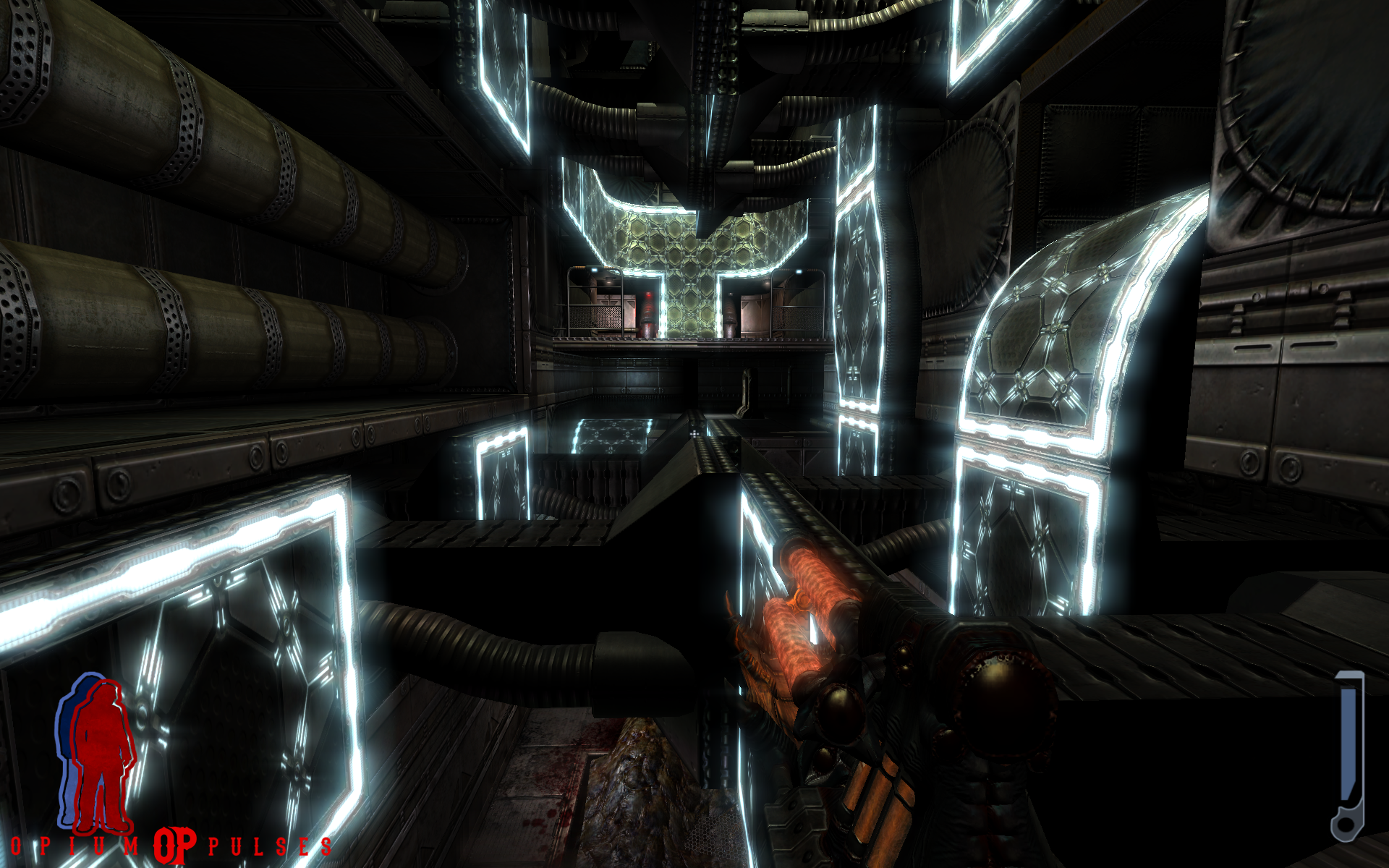 This is just a taste of what you should come to expect when it comes to gravity-bending walkways.
And while the sprawling catwalks may be the main gravity defying mechanic, its far from the ONLY one. You may notice glowing blue pads on various walls- these will, quite literally, turn your world upside down. Shooting any given pad will shift the room orientation, so that pad that you activate will become the floor. It's an outstandingly unique mechanic that heavily impacts Tommy's traversal through The Sphere, often spanning through different "layers" of any given room as well. Often they may be in combination with puzzles, both simple traversal and other times more literal.
Much to my delight, it was very obvious that puzzles in Prey were made to augment the experience. It's just enough to make you scratch your head for a moment while you ponder to figure it out. It hit this very fine balance of making a puzzle solution clear once you have all the pieces without being overly frustrating. They don't drag on, they won't have you ripping out your hair, and many times you'll walk away, shaking your head at just how nifty and well thought out it really was. While not absolutely endless in terms of variety, there is ENOUGH that it keeps gameplay entertaining, as well as teaching you how to approach puzzles in the future, and things to look for. This was, undoubtedly, one of my favorite aspects of the game.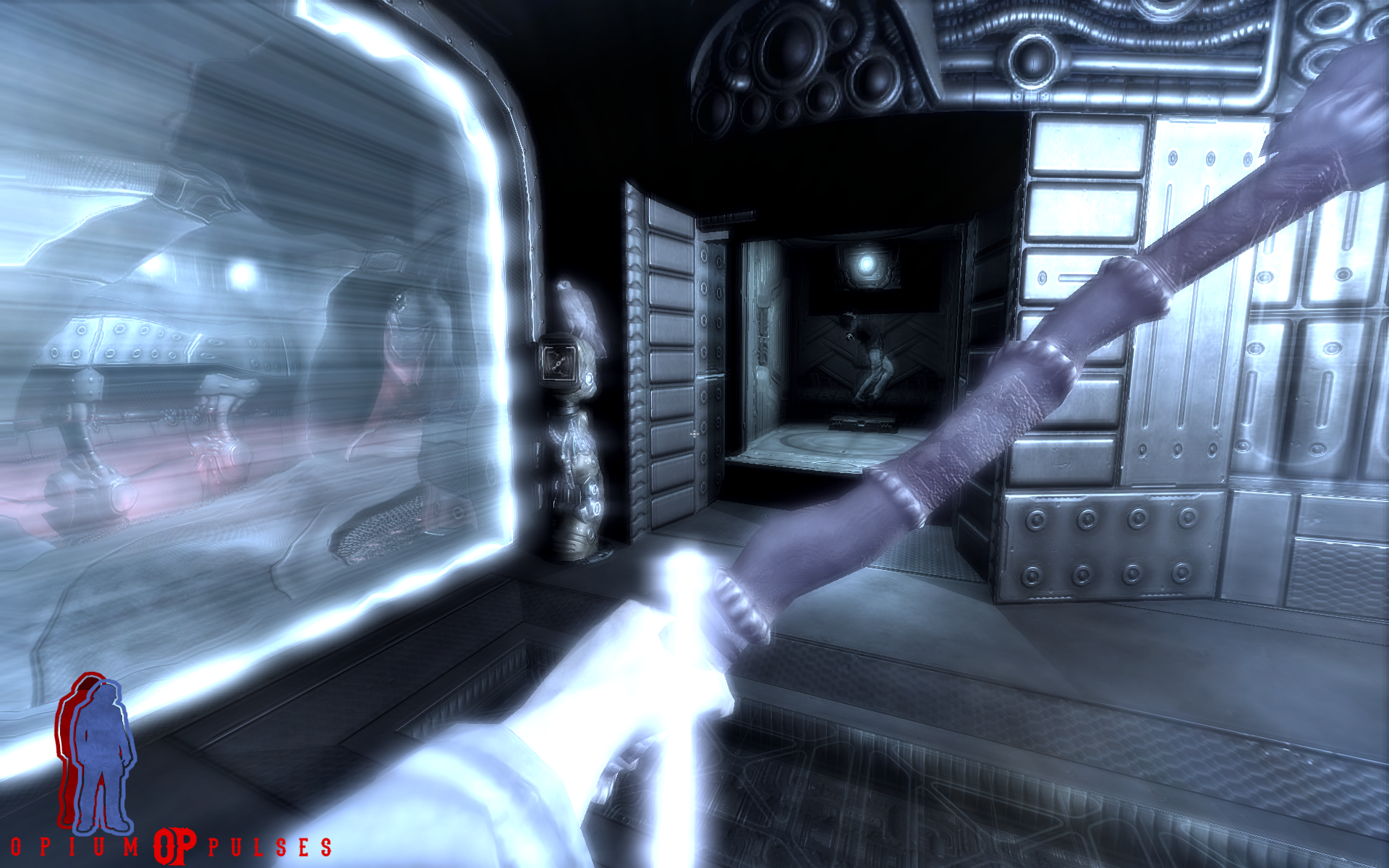 Not all puzzles are focused on gravity. Spirit Walking allows for some very fun situations, and a few very unique puzzles that ultimately become a game of "move your physical body".
What ARE These Things!?
Visually, Prey was really on-par with other games released around 2006, and not considered radically "above and beyond". However, the innovative spatial mechanics and often jaw-dropping art direction really lent to the game feeling like it was something ahead of its time. Based off the intro alone, I feel players were left feeling unsure of what they were in for. The human models were stiff which made them seem a little sub par, leading to a slightly dated feeling. I say that with a grain of salt, as my initial reaction was really thrown to the wind the deeper in I got.
iD Tech 4 was, at the time, most well known for being the engine that Doom 3 was built on. So much so, it is often more commonly referred to by its nickname of (ironically) the "Doom 3 Engine". Prey was built on an EXTREMELY modified version of this engine that allowed for some stunning visuals and tricks. Doom 3 is quite famously known for its dark and moody style, playing heavily into feeling trapped in tight industrial corridors. Prey, on the other hand, flipped this engine on its head; they pushed it in directions that had yet to be seen with sprawling massive skyboxes, grotesque biological aliens, mutilated experiments, and unique living weapons.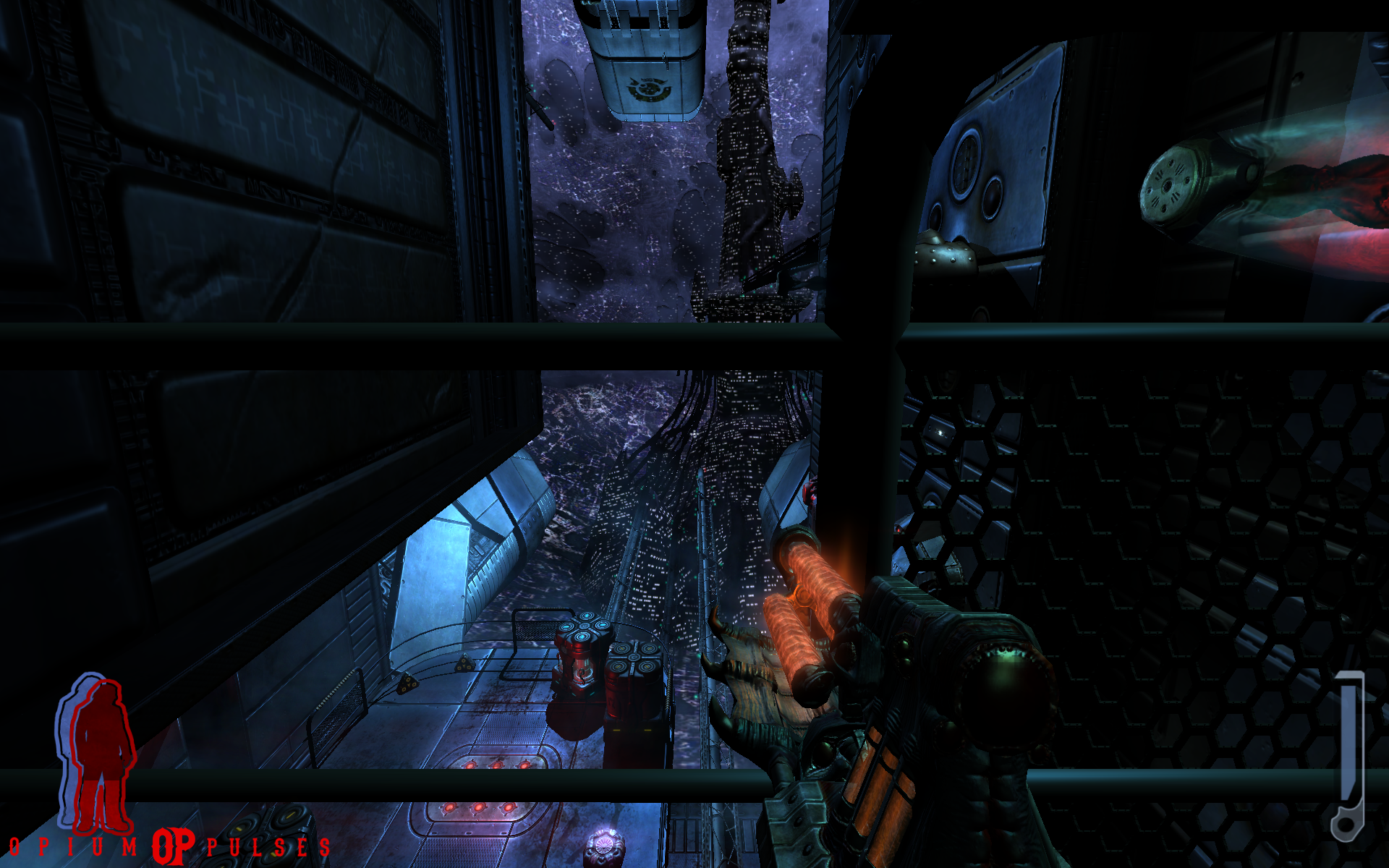 There are several reveals that really leave the player in awe at the amount of magnitude they were able to bring to space. Even though you are on a ship most of the time, you never really forget how small you are in comparison to what you are shown.
The attention to detail is staggering, and while the Sphere has a very distinct overall tone, each area in the ship felt unique, eliminating potential monotonous boredom. Not only that, but the ship has its own little unique ecosystem at work, if you look close enough. Not everything will want to kill you, as long as you don't give it reason. It's easy to notice the enemies and critters often nipping at your heels with reckless abandon. But some of the story is told without using words, and leave the player to fill in the gaps. What could be the reason for this mass abduction? What happens to all the helpless souls caught up and sorted through? Where do they end up? Some answers are far more obvious than others, some may be right Infront of you, and some may be tucked away out of sight, only to be found if you have a keen ear.
In multiple areas through the ship, you can actually catch radio broadcasts, giving you some idea of what is going on for those who didn't get ripped from the Earth's surface. This was a delightful, and other times entertaining touch by Human Heads Studios, reminding the player where they are and what could be at stake- though Tommy himself is blind to anything beyond rescuing Jen, no matter the cost. While it may make him seem selfish and brash, it really plays a role in the deeper story. 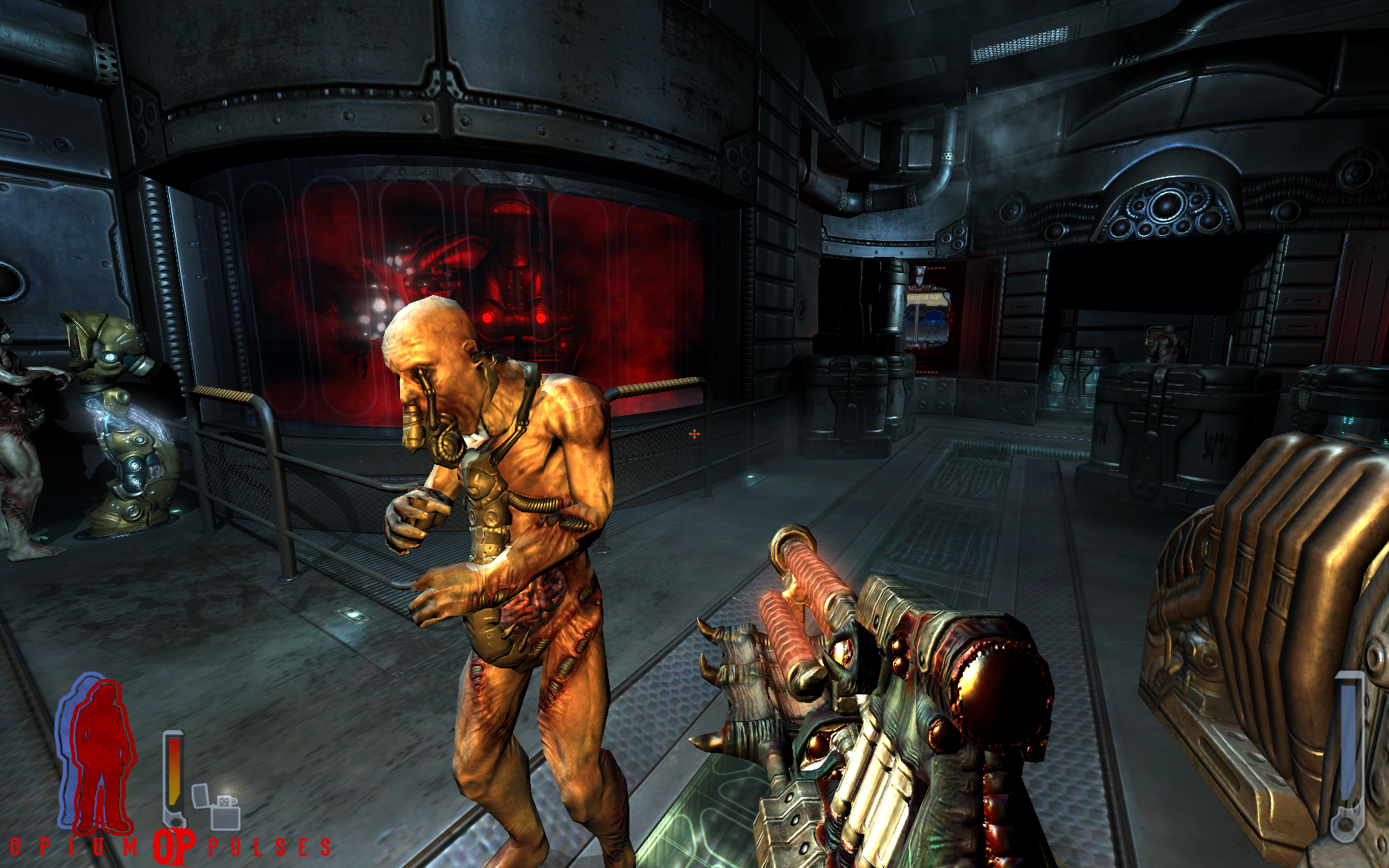 Mostly harmless if left undisturbed, what once used to be humans are left to perform menial tasks within the ship. An unfortunate fate.
A Grand Scope that is Out of this World
Prey had already thrown quite a few curve balls at me by the time I had surpassed the half-way point. Having gone in to the game entirely blind, all I knew, initially, is that it was a first person shooter. Nothing more. In reality, I actually played the 2017 release before I touched the original namesake, so I didn't know what I was in for- only that the two were vastly different. While I was given that base expectation, in reality I was given much more. Imagine my delight when I was handed multiple Alien Shuttle segments.
Some of the segments occur internally along some really cool traversal highways, while other take you to the exterior of the Sphere. Not only do you fly, but you will have to fight for survival as well as navigate some puzzle elements along the way using an on-board tractor beam. It was a nice break thrown in multiple times, mostly in the back-half of the game when players might need it. Beyond being a mere break, it also takes every chance it gets to put more emphasis on just how small you are, and how grand a scale the Sphere is, which still pales in comparison to the vast space around you. 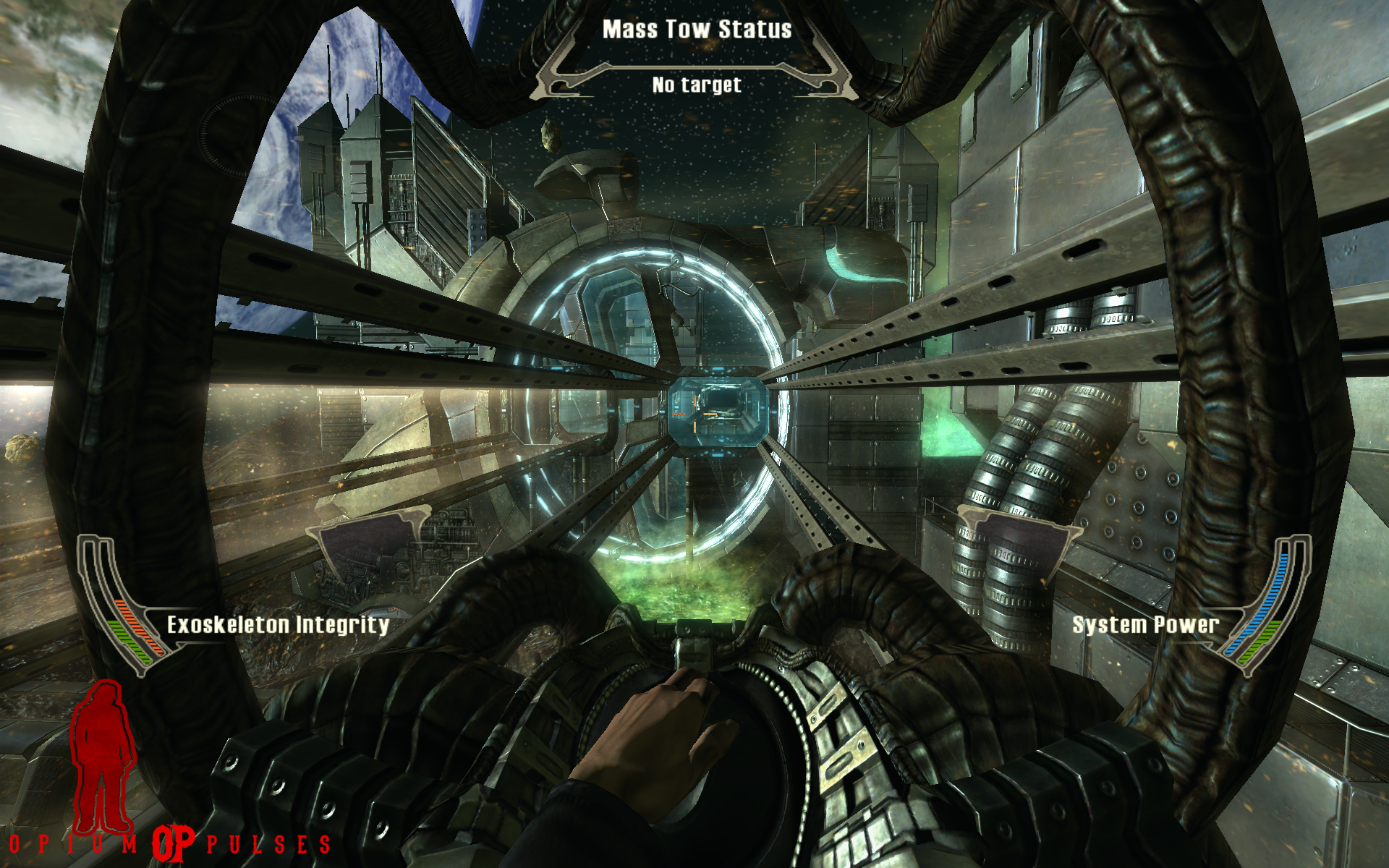 An unexpected delight, Alien Shuttle segments that make you feel delightfully insignificant, and marvel at the world around you.
Ultimately, Prey manages to throw players an absolutely delightful smorgasbord from start to finish. The Scope of the game, and what it allows players to do really is impressive. A story that can surprise you, solid gameplay that gives you a variety of puzzles and ways to play, and a whole slew of unique and interesting weapons for you to enjoy. And by enjoy, I do mean be careful where you aim. One wrong move and you may find yourself in a spiritual Death Realm fighting for your survival. But even then, death is temporary. Wraiths circle you, as your Spirit Walk form shoots them from the sky, allowing you to refill both your Health and Spirit meters. This game was meant to be enjoyed and experienced, not frustrate you. I think it was a wonderful choice made by the development team that keeps players locked in and immersed from beginning to end.
The End?
Realistically, Prey is a fairly short FPS. You can complete it in around 7 to 8 hours, while people who want to explore the ship and listen to radio logs will probably clock in around 10 or so hours in total. Time can absolutely fly by with how interesting the story turns out to be in the end. And there comes the bitter reminder that it is highly unlikely we will ever get a Prey 2.
There is some slight replay value, as two modes unlock once you beat the game: Casino and Cherokee. They're somewhat self explanatory; Casino never lets your game progress past the Roadhouse at the very beginning (allowing you to enjoy the slew of entirely functional machines with games like blackjack), while Cherokee is basically what we would now call Nightmare Mode. It may or may not be enough to entice players for a second round, depending on if you want a challenge, or some time to kill on slots.
In all reality, you can take the ending of the game in one of two ways, as we are left on a cliffhanger. "We won't ever know what happens!" or "Well, they wrapped it up enough to where I can fill in what I think could have happened." It's very obvious that there was VERY clear intent for the story to continue. But through details given throughout the story, the player can likely come to a few conclusions of what happens in the aftermath. Take it as you will, and fill in the blanks as needed; that is very likely all we will ever have.

Sadly, never meant to be.
Case Brief:
Much to my utter delight, 20 years later and Prey is still an absolutely solid game to revisit. While it clearly can't hold a flame to modern day graphics, it's a far cry from being considered "hard to look at". If anything, it just shows it's age, but gracefully. A game that can still be enjoyable two decades later is no small feat. I was more than happy to spend my time exploring all the nooks and crannies of the Sphere, and plan to do so again in the future. Games like this can often be imitated, but not replicated. There was a passion and drive that kept Prey alive through Development Hell, and it paid off in spades- it still shows to this day. I felt the sense of wonder and nostalgia that I remember that you only got during a time when graphics and engines were evolving. They could be pushed. They could be something unexpectedly amazing- and Prey is just that.
Being delisted, you won't find it on any digital storefronts, and tracking down a key through resellers will likely cost more than the game is realistically worth. At the time of writing, universal Steam keys average around $150 USD. To put that into perspective, it would be far cheaper to pick up a used Xbox 360 and a physical copy of the game. In fact, if you happen to have an old 360 collecting dust in the closet, you may already have the most expensive part covered.
Honestly, that's one of my top recommendations. However you manage to stumble across this Delisted Diamond, don't let it pass you by. Experiences this unique don't come around often, and it'd be a real shame to let one disappear into obscurity simply because it fell off the digital shelf.

 11
11