


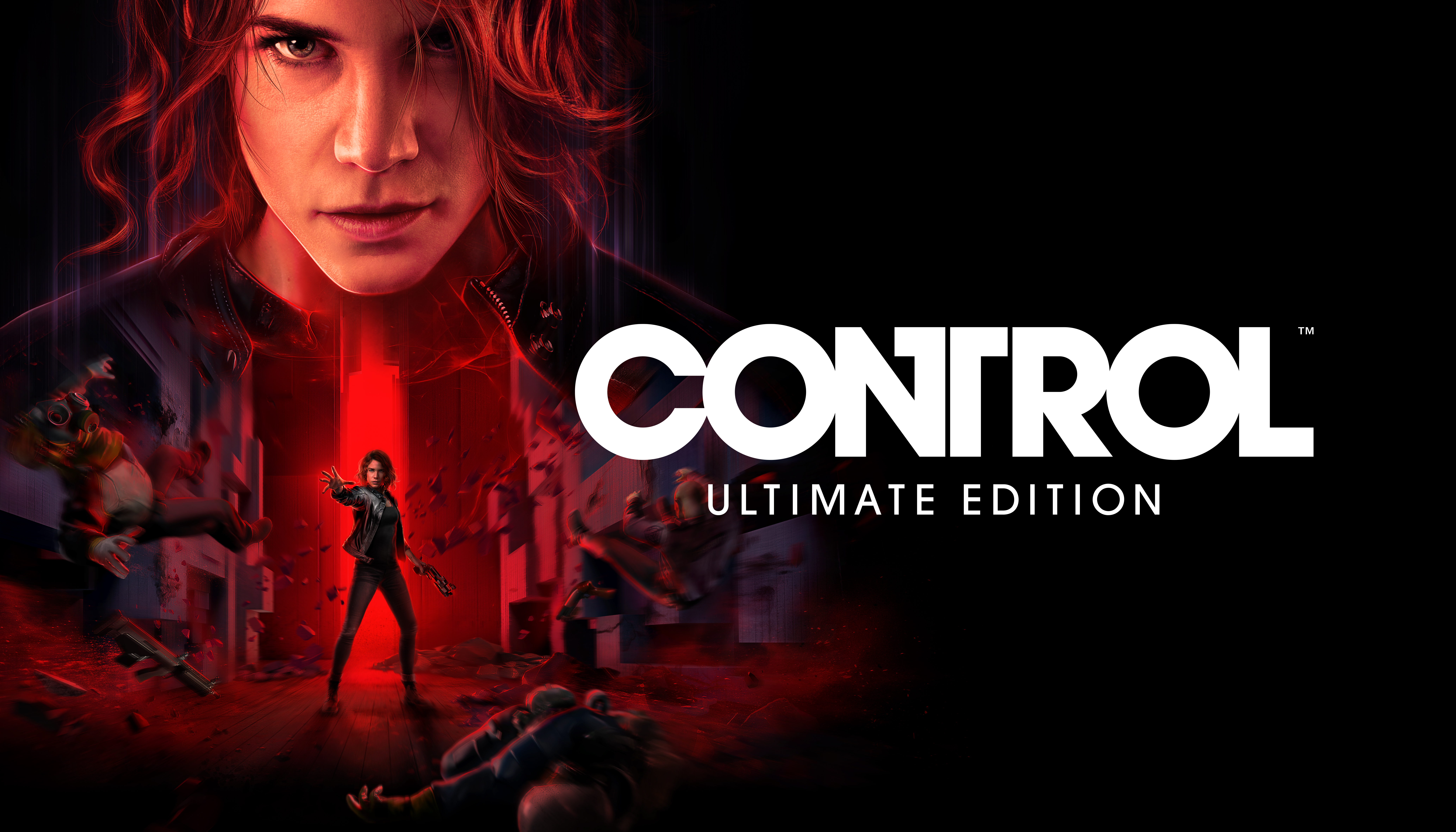
Set in modern day New York, Control takes place inside the Federal Bureau of Control, a government agency dedicated to supernatural phenomena. You play as Jesse Faden, a woman whose search for her missing brother has led her to the Bureau. Entering to find that the building is in a state of emergency brought on by an out-of-control entity, she now has the task of gaining back the building while still seeking information on her brother. Starting from nothing, Jesse gradually gains both gun and supernatural abilities as she combats possessed agents and restores enough order to override the lockdown state.
Surrounded by bizarre circumstances, Jesse continues to make her way through each obstacle with unrelenting determination, task-focused and with the occasional sarcastic comment or general remark on the situation. And the situation is bizarre. Even without the entity that's currently taking over, the building itself has its own sort of life, and reality shifts and distorts around it. It can make navigation a bit confusing at times, especially when it comes to revisiting various places by fast-travel, but at least the place has great signage. This all helps add to the surreal atmosphere made up of the mix of supernatural and mundane that are becoming a staple of Remedy storytelling.
Atmospheric Surrealism
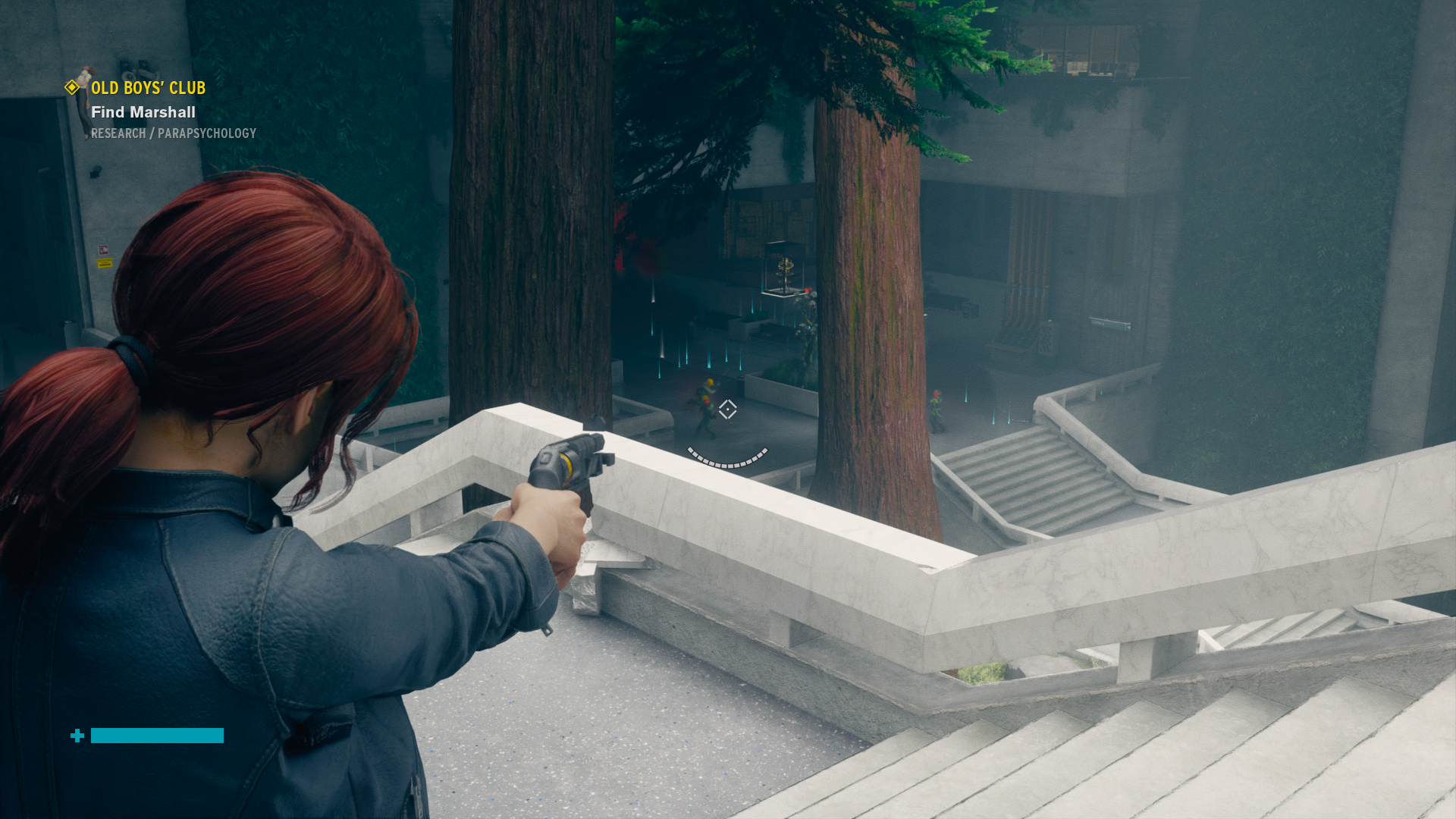
Although the game has some elements of atmospheric horror, especially when it comes to entering new areas and encountering strange situations, overall, it feels more like a paranormal adventure with unsettling elements than it does a horror game. The lighting and atmosphere is centered around creating scenic moments inside what could otherwise be a dull and institutional government office. The sound is excellent in helping to keep up up a feeling of tension and unease during exploration, and the murmurs of the enemy entity echoing through the halls creates an unsettling feeling. Red emergency lighting makes it clear when an area is in a particular state of danger, warning players to be on their guard.
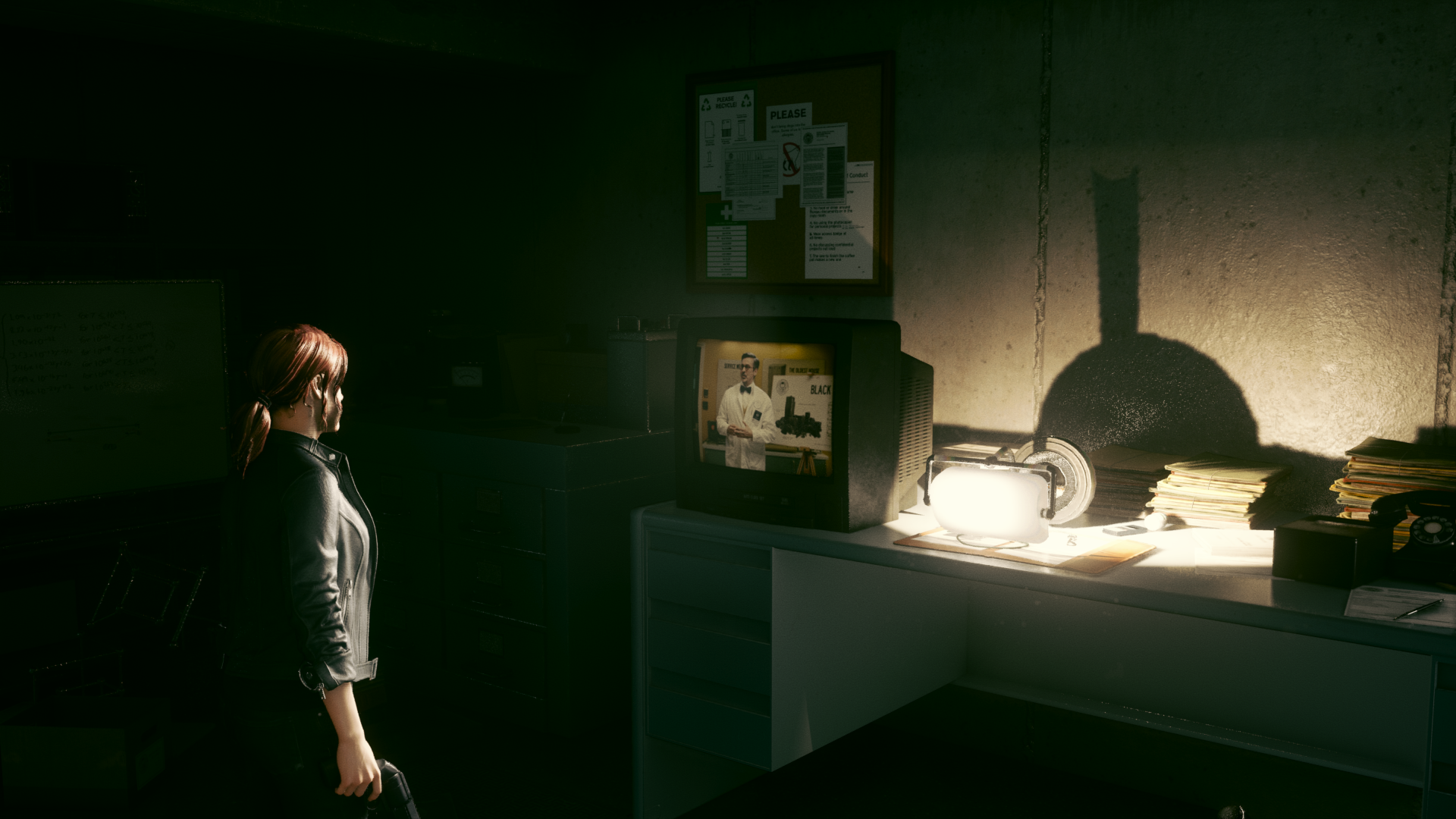
Exploration can feel quite rewarding. There are plenty of collectibles scattered throughout the levels, including sound clips and notes on research and goings on at the Bureau, complete with blacked out redactions. These add to the atmosphere and provide a bit of humor. Most are mainly flavor to add to the lore, so players don't need to feel obligated to stop for each one and can continue on with the action if desired. Especially since, once collected, they remain accessible from the menu. Even more fun than that are the series of informational videos that explain the workings of both the Bureau and of various supernatural elements. Framed as educational presentations by the head of research, these live-action FMVs add bursts of semi-metafictional geeky energy that help contribute to the surrealism.
Combat with Options
Combat can be seen as either interesting or tedious depending on a player's approach. Since the enemies mainly consist of possessed agents, their appearance tends not to vary an extreme amount, but different specialists have different strengths and weaknesses and each section of the Bureau has a different feel, especially when it comes to cover and ammunition availability, so there's a decent amount of variation in the battles. However, things can quickly feel repetitive when multiple battles occur in the same location within a short period.
Things start off a little slow with the acquisition of a gun, but they quickly pick up as Jesse gains different abilities and swappable "mods" upon progressing through different challenges. Some challenges (and abilities) are optional, but one of her main powers becomes the ability to chuck just about anything she wants at her enemies. This is one of the most enjoyable aspects of combat and it can be extremely satisfying to toss various props around to eliminate your foes. In fact, once it becomes an option, it's easy to forget you even have a gun. Because why shoot at things when you can chuck a few chairs and a fire extinguisher at them? Not everything is throwable—it's mainly larger items that could do some real damage, but going through a room and seeing most of the furnishings lighting up as ammo feels quite satisfying.
As far as difficulty goes, the enemies do get tougher as the game progresses. Jesse also builds up her abilities and upgrades, so the combat generally tends to feel well-balanced. However, there are some late-game bosses and optional areas that range from difficult, to extreme, to "Why, oh why does this even exist?" which means that hardcore players have plenty of challenges that they can test their builds and skills on. The most difficult sections are optional and there are accessibility settings ranging from aim assist to one-hit kills, with scalable damage reduction and ability recovery, so if the difficulty gets to be too much, players can scale it down to something more enjoyable for them.
Juggling with Content
The game has a lot of content, especially when you factor in the two DLC episodes, most of it contributing to expanding the lore and challenge. However, there was one aspect that I didn't find engaging at all. This was the Bureau Alerts, which are mini events that pop up from time to time. The events are timed, with plenty of leeway for completion, but they come up randomly and are often in some other part of the Bureau that is nowhere near where your current focus is. They're presented as an emergency call to whichever department is under attack, but since Jesse's current area of focus is also under attack and also seems to need urgent attention, I found them to be more disruptive than engaging and I nearly always ignored them.
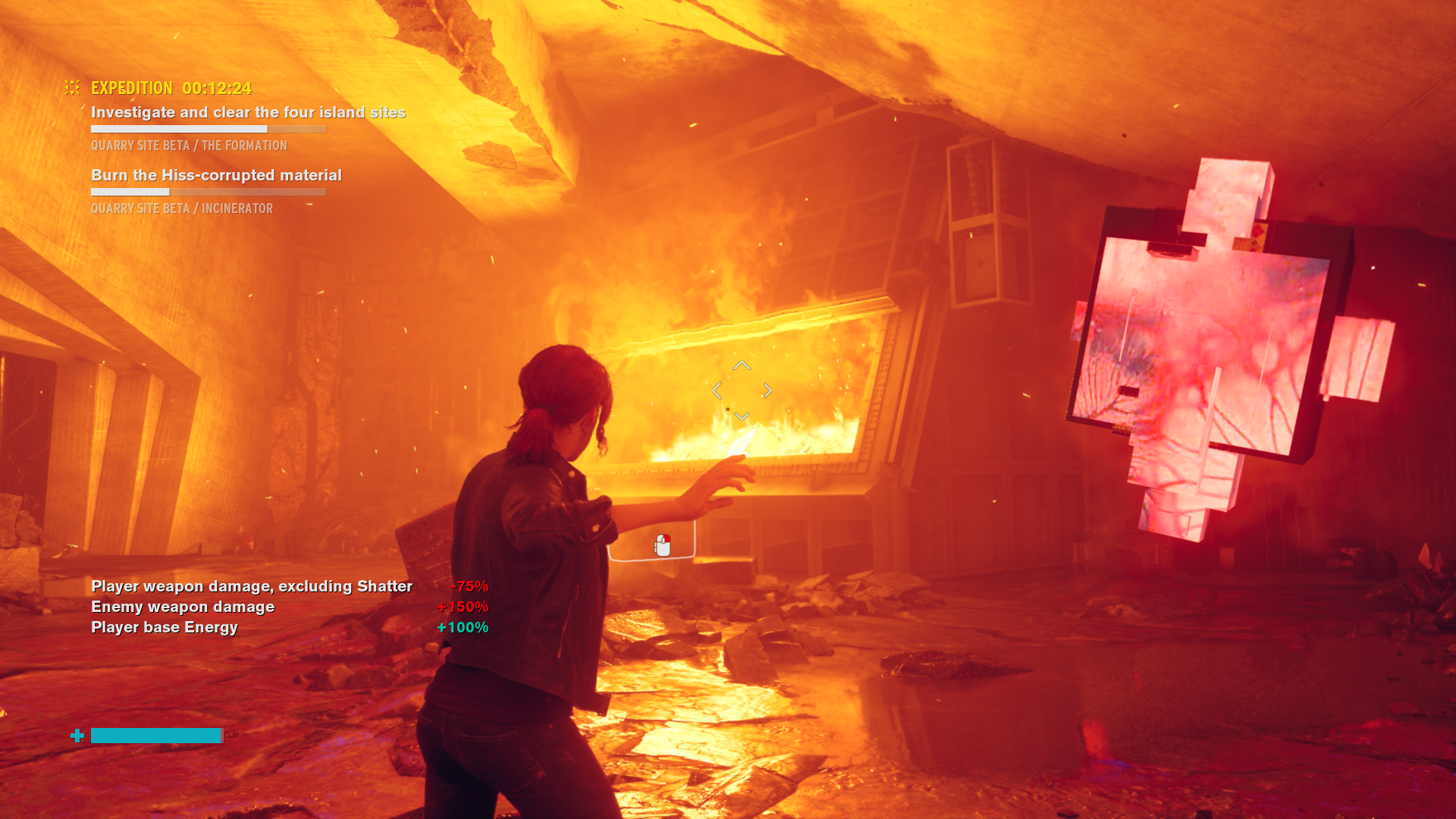
The two DLCs (AWE and The Foundation), on the other hand, add depth to the experience. They expand the map with two entirely new areas to the Bureau that each have their own feel. The Alan Wake content found in AWE keeps the general office feel but it's much darker and you'll be getting a lot of use out of the flashlights that you can carry through that section. It does also have more of the horror feel to its atmosphere. AWE lore ties into Alan Wake more than expanding upon Control. The Foundation is much different, with a dig site/excavation kind of feel. It's more about exploring [Redacted Redacted Redacted Redacted] of the mysterious building where the Bureau exists. It directly expands upon Control itself and continues the plot from where it left off in the base game.
There's one last bit of annoyance I think worth mentioning that's increasingly relevant by the time you work your way through each of those DLCs—character and weapon mods drop frequently and you have limited storage space, so a lot of time can get wasted trying to juggle which perks you want to keep. Then again, you can always chuck any medium-level or lower that you aren't currently using since you'll likely pick up something better later.
Quick Reference
Control is a third-person action-adventure game from Remedy Entertainment.
Best played in a quiet environment while in the mood to be a little lost.
Strengths:
• Immersive world-building.
• Engaging combat.
• Includes accessibility options for combat.
Weaknesses:
• Some side content can be repetitive.
• Inventory management can detract.
 0
0 
