


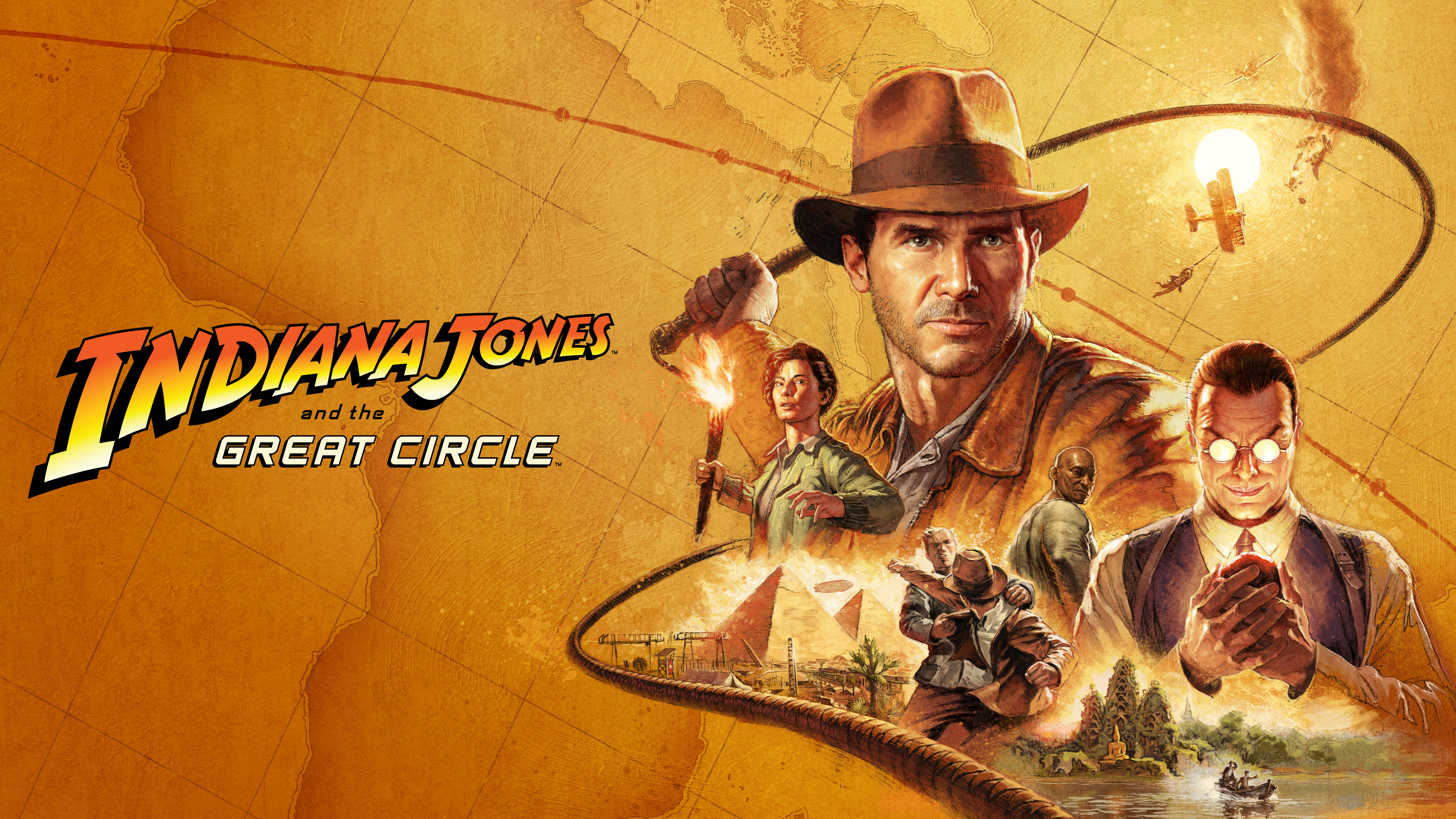
Indiana Jones is a name that can conjure up a feeling of excitement and adventure just by being mentioned, so, like many, upon hearing that Bethesda would be releasing Indiana Jones and the Great Circle, I knew that, good or bad, I'd be wanting to play this game. The only snag (as is the case with so many AAA games) was that it was prohibitively expensive for me to get upon release. I ultimately used a free month of Xbox Game Pass to play, though I later learned I could access the DLC as well by playing through Luna.
Indiana Jones and the Great Circle is set in 1937—between Raiders of the Lost Ark and Last Crusade. In fact, one of the iconic scenes from Raiders is used as the game's introduction, allowing players to reenact a classic moment in Indiana Jones history before continuing on to the new plot and storyline. Not counting the flashback intro, the base game features three major locations with in-depth exploration and four smaller areas to traverse as Indy's travels take him on a journey across four continents. The three major areas include the Vatican; Gizeh, Egypt; and Sukhothai, Thailand. The Order of Giants DLC adds a few new locations, but all of that expands on the Vatican section of the game, journeying through and below Rome on a separate adventure.
A Cinematic Experience
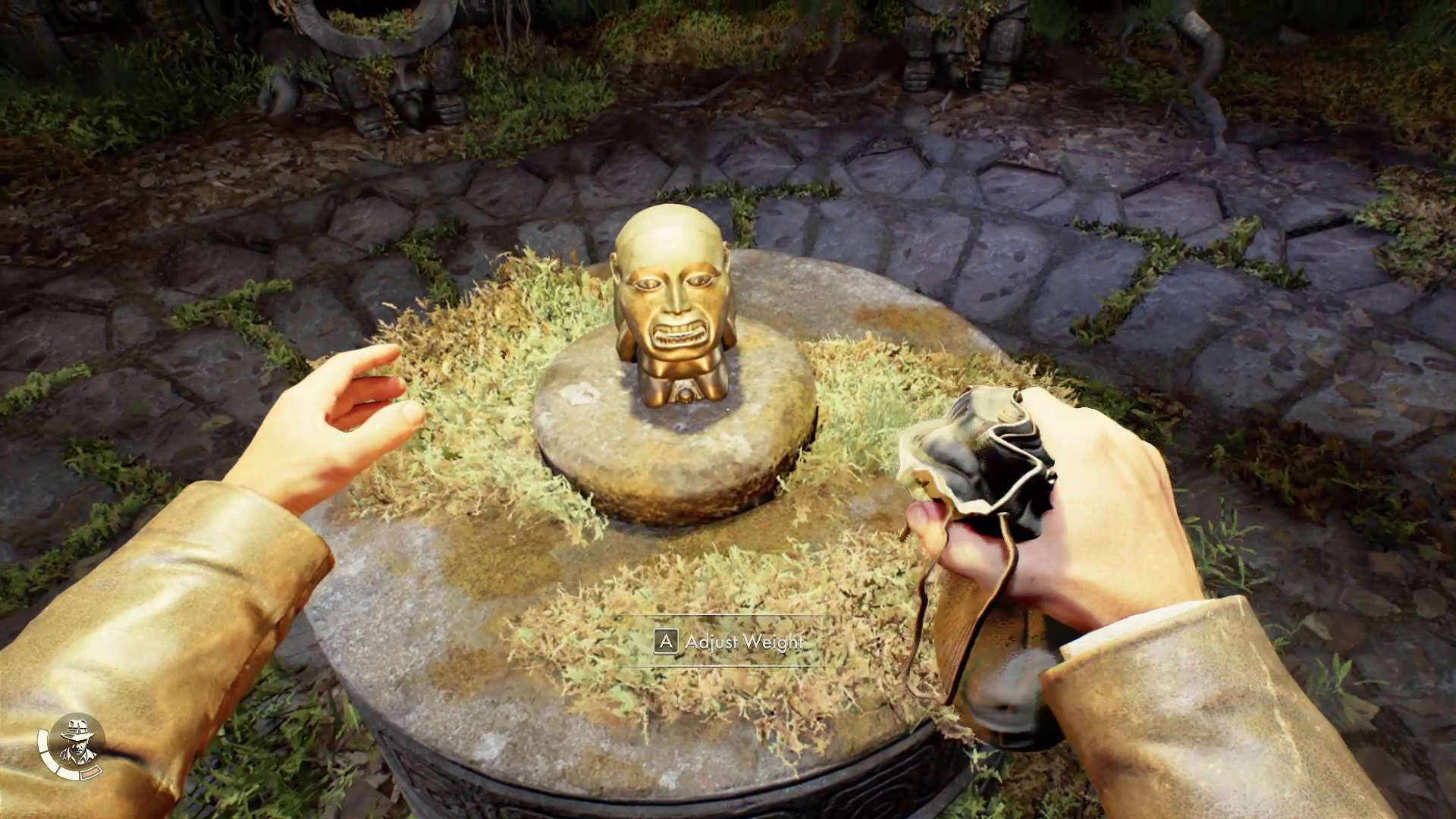
I'll get into perspective choices in a bit, but as far as the artwork itself goes, the scenery was gorgeous, the characters and costumes were well designed, and the atmosphere worked very well for an adventure game and for an Indiana Jones game in particular. The voice acting is spot-on. Although Harrison Ford does not voice the character, the voice of Indy was 100% Indiana Jones (Ford even said that if he'd realized Baker was going to do such a good job, he'd have just done it himself; he also referred to the performance when he commented that "you don't need AI to steal my soul"). The rest of the acting is comparable, making for a high-quality cinematic experience. As for the plot, it's an adventure that starts with investigating a theft and turns into a race against Nazis to uncover secrets that could cause disaster of biblical proportions. The era, tone (quite humorous in parts with Indy's side-quips), and occasional over-the-top moments of insanity all work well to give the game the feel of a pre-Crystal Skull Indiana Jones film.
The Order of Giants DLC goes in-depth into Rome and can be fully completed in the early stages of the game (save a single collectible that requires late-game equipment). It's your choice when (or if) to play it, but it does extend the already rather large Vatican section even further, making the game feel heavily weighted to content near Rome compared to later areas. Since the plot is essentially its own contained story, it can work well as a side story before getting into the main part of the game or as an extra opportunity to keep playing after finishing the main story. The game makes it easy to return to completed areas later on to seek collectibles and complete unfinished side quests (and Order of Giants can be seen as one very large side quest) so it would even be possible to play through it a little at a time while continuing the main game.
An Adventure of Fists and Wits
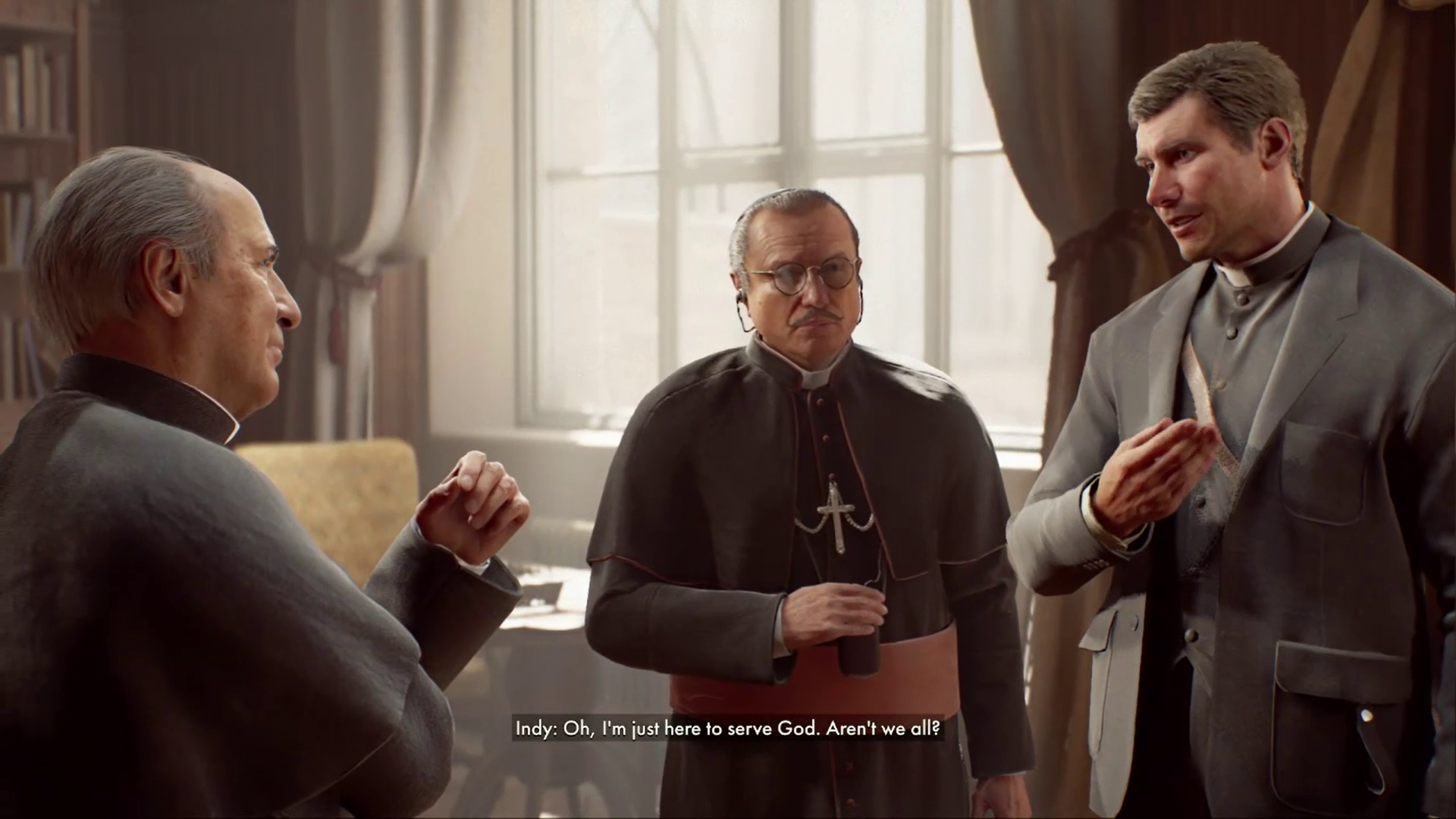
As can be expected, the gameplay of Indiana Jones and the Great Circle combines action, puzzle solving, and general exploration. There are several difficulty options to choose from for combat as well as an option to reduce puzzle difficulty. I played using the "Moderate" option for both and found the game to be pretty forgiving—I ran around like a doofus and rarely had trouble for it. Combat can use Indy's traditional tools of the trade but also features an assortment of improvised weapons scattered throughout each region (enough that it's easy to accidentally pick up a "weapon" thinking it might be a collectible) and I liked that most situations had multiple approaches available, so you could pick whether to go in swinging, stealth your way through, or find an alternate path. The mix of puzzles throughout the game were something I greatly enjoyed as a puzzle enthusiast. There were some typical ones that can be seen in various games as well as more unique ones, but they all seemed well-themed to me and there was a decent mix of challenges versus easier tasks.
Exploration has a lot of the feel of similar adventure games, with each area offering freedom of exploration but with white paint spills and tied cloths to let you know something is climbable. Indy's whip takes on a much more prominent role in this game than it does in the movies, being useful in all three main gameplay aspects of combat, puzzles, and getting around. You'll get used to hearing its crisp, sharp crack throughout the game but will need to take care as its distinctive sound also alerts NPCs to your presence. It can also be a little bit temperamental because whip climbing can sometimes fail at certain angles, resulting in an unexpected fall to the ground. The third major section of the game features a great deal of exploration by boat, which can be fun when initially exploring but can also drag quite a bit when quests take you back and forth across the map. Even with the fast travel points, I found myself wishing my adventure companion would handle navigation for me once in a while if I just wanted to return to a previous point.
Performance through Amazon Luna was hit-or-miss. Sometimes the game was very smooth and sometimes it had a lot of lag, especially during cut scenes, but the nature of the lag gave the distinct impression it was a game performance issue and not an issue with the streaming service. The game had similar issues when played on my gaming laptop as well—not really a surprise with its hefty requirements, including mandatory ray tracing. On top of performance issues, there are still other bugs here and there, including some annoying ones if you're collectible hunting—some icons remain on the map indicating there's something to find even when you've already found it.
Indiana Jones in First-Person
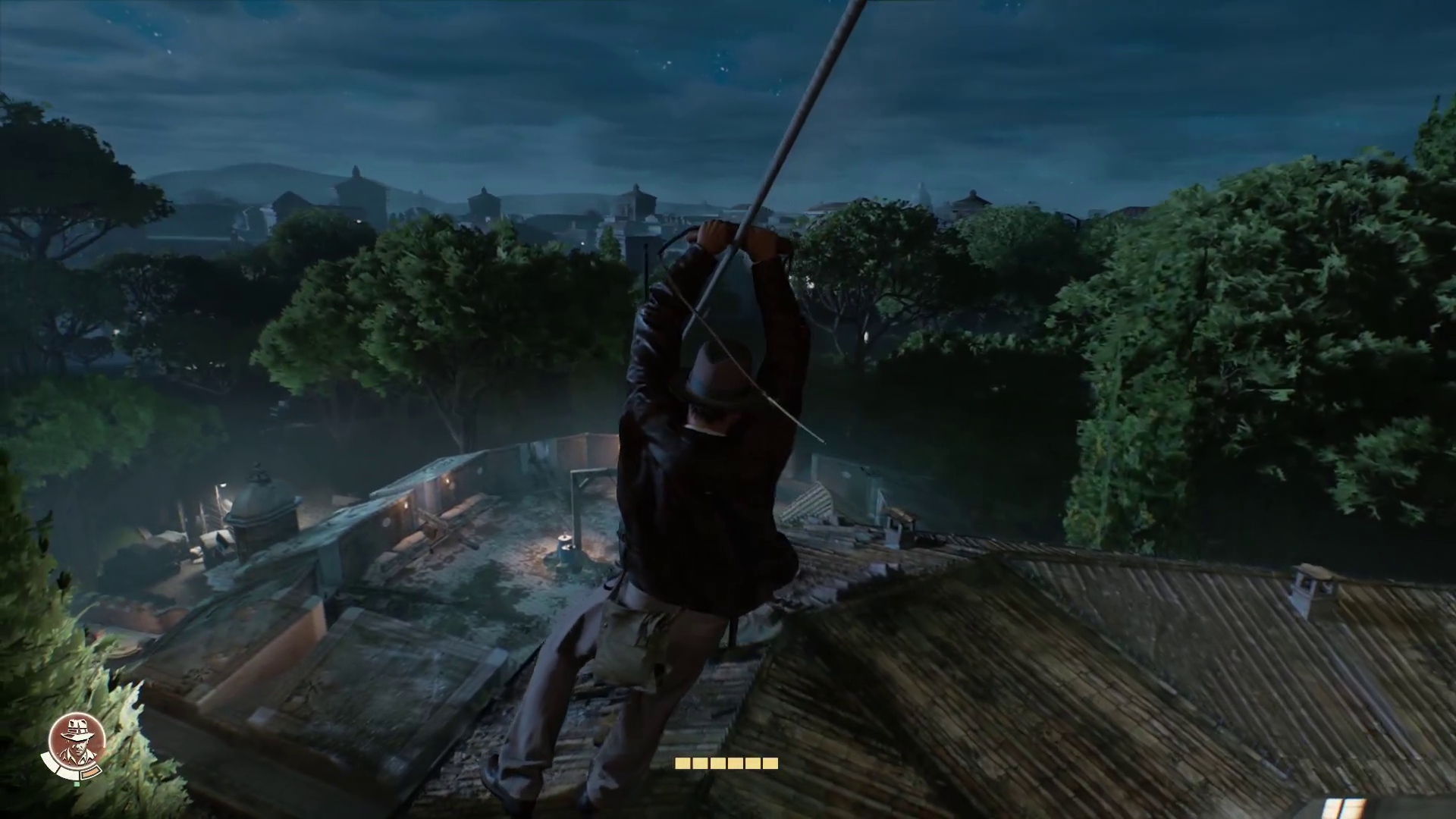
The decision to force a first-person perspective was the greatest negative of this game for me. I have heard many people say they loved the first-person perspective and that they were able to be immersed in the feeling of actually being Indiana Jones on an adventure, but it had the complete opposite effect for me. For me, it decreased the feel of an Indiana Jones game and made it more like a generic adventure. I've read that part of the decision to use first-person perspective was to set the game apart from other titles such as Uncharted, but the way it played out, overall, the gameplay felt extremely like that of an Uncharted game and not being able to see Indiana Jones as I played only heightened that feeling.
I wasn't able to immerse myself in the sense that I was Indiana Jones because I was missing an important key element—my hat. As someone who spent a period of several years wearing a heavy leather hat created in the style of Indy's fedora, it made me feel naked and not very Indy-like at all not to see my hat at the top of my view. I felt this even more strongly the few times I was downed while in disguise—if I could have seen I wasn't wearing my hat, I might have remembered that I didn't have the special ability tied to my hat that would let me try again and I may have moved more cautiously. Indy is still present in the cut scenes and while climbing or ziplining, so I could at least be able to enjoy seeing him there, but at the same time, this also broke immersion for me as it made me wonder, "Which is it?" Am I watching a new movie in which I get to control Indy, or am I getting to be him? This half-and-half perspective meant I couldn't really immerse myself in either one since I was constantly being returned to the other.
Quick Reference
Indiana Jones and the Great Circle is a first-person adventure game.
Best played in a mood for lengthy exploration.
Strengths:
• Quality acting and a strong script capture the feel of playing an Indiana Jones movie.
• Freedom of exploration, including being able to return and reexplore previous locations.
• Engaging puzzles that are well-integrated into their surroundings.
Weaknesses:
• Mainly first-person with intermittent third-person perspective switches can impact immersion and limit accessibility.
• In some sections, the exploration can become tedious with backtracking between locations for quests.
• Demanding requirements can make for choppy play even on decent systems.
 0
0 
